
Socket IP Ratings Explained: Choosing the Right Electrical Accessories for Every Room
Socket IP Ratings Explained: Choosing the Right Electrical Accessories for Every Room
IP ratings indicate how well an electrical accessory is protected against the ingress of solid objects, dust and water. Understanding these ratings helps you choose sockets that are suitable for different environments, particularly kitchens, bathrooms, utility rooms and outdoor spaces.
When shopping for electrical accessories, you may come across terms such as IP44, IP55 or IP66. While these markings are common on outdoor sockets and weatherproof electrical equipment, many homeowners are unsure what the numbers actually mean or when a higher IP rating is necessary.
Choosing an accessory with the correct level of protection is about far more than appearance. Moisture, dust and dirt can reduce the lifespan of electrical products and, in certain situations, create safety risks if unsuitable equipment is installed.
This guide explains what IP ratings mean, how the numbering system works and where different ratings are commonly used in UK homes.
What Is an IP Rating?
IP stands for Ingress Protection. It is an internationally recognised classification system that describes how effectively an enclosure prevents the entry of solid objects and liquids.
The rating follows the format IPXY, where:
- The first digit indicates protection against solid objects and dust.
- The second digit indicates protection against water.
The higher each number, the greater the level of protection provided by the enclosure.
Understanding the First Digit (Dust Protection)
| First Digit | Protection Against Solid Objects |
|---|---|
| 0 | No protection. |
| 1 | Objects larger than 50 mm. |
| 2 | Objects larger than 12.5 mm. |
| 3 | Objects larger than 2.5 mm. |
| 4 | Objects larger than 1 mm. |
| 5 | Dust protected. |
| 6 | Dust tight. |
For most domestic applications, the first digit is rarely something homeowners need to think about, but it becomes increasingly important in workshops, garages and outdoor installations where dust may be present.
Understanding the Second Digit (Water Protection)
| Second Digit | Protection Against Water |
|---|---|
| 0 | No protection. |
| 1 | Vertically falling water. |
| 2 | Water falling at an angle. |
| 3 | Spraying water. |
| 4 | Splashing water. |
| 5 | Water jets. |
| 6 | Powerful water jets. |
| 7 | Temporary immersion. |
| 8 | Continuous immersion. |
The second digit is usually the most relevant when selecting electrical accessories for locations where water may be present.
The Most Common IP Ratings Found Around the Home
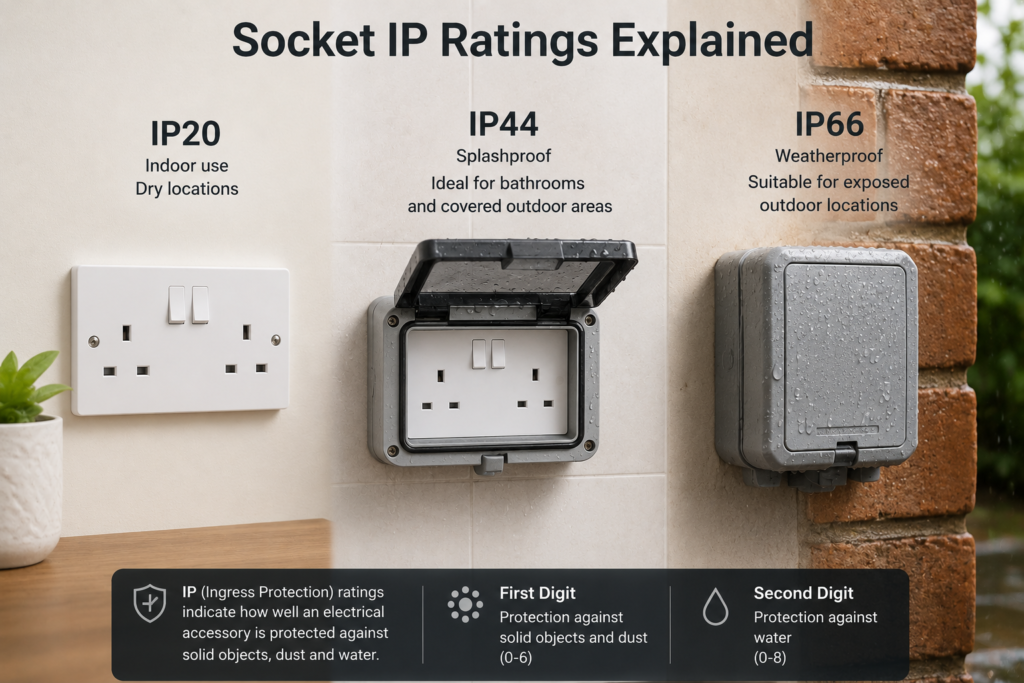
IP20
IP20 is one of the most common ratings for standard indoor sockets and switches. These products are intended for dry indoor environments where they are not exposed to water or excessive dust.
Typical locations include:
- Living rooms.
- Bedrooms.
- Dining rooms.
- Hallways.
- Home offices.
IP44
IP44 accessories are protected against splashing water and solid objects larger than 1 mm.
This rating is commonly found on:
- Bathroom accessories (where appropriate).
- Covered outdoor sockets.
- Utility rooms.
- Garden electrical products.
IP55
IP55 products provide increased protection against dust and water jets, making them suitable for more demanding outdoor environments.
They are often used for:
- Outdoor power outlets.
- Commercial premises.
- Garages.
- Workshops.
IP66
IP66 accessories offer excellent protection against dust and powerful water jets.
These are frequently chosen for exposed outdoor installations where electrical equipment may be subjected to heavy rain or challenging weather conditions.
Do You Need IP-Rated Sockets Indoors?
In most rooms, the answer is no.
Standard indoor sockets with a typical IP20 rating are perfectly suitable for dry environments such as bedrooms, lounges and studies.
Higher IP ratings only become necessary where there is an increased likelihood of water, moisture or excessive dust reaching the accessory.
What About Kitchens?
Kitchens are one of the most common areas where homeowners become confused.
Although kitchens contain sinks, taps and cooking appliances, most standard sockets installed above worktops remain outside areas where they are directly exposed to water.
The important consideration is not simply that a room contains water, but whether the accessory itself is likely to be subjected to splashing or other environmental conditions that require additional protection.
Why Are Bathrooms Different?
Bathrooms require special consideration because water is far more likely to come into contact with electrical equipment.
Electrical installations in bathrooms are subject to specific requirements regarding location, equipment selection and installation.
Rather than relying solely on the IP rating, installations should always comply with the relevant electrical regulations and be planned appropriately.
This is one reason why shaver sockets are commonly found in bathrooms, while standard socket outlets generally are not.
Why Outdoor Sockets Need Higher IP Ratings
Outdoor electrical accessories are exposed to changing weather conditions throughout the year.
Rain, wind, dust, insects and fluctuating temperatures all increase the demands placed on electrical enclosures.
Weatherproof sockets therefore use seals, gaskets and protective covers to help prevent moisture entering the enclosure while maintaining safe operation.
Is a Higher IP Rating Always Better?
Not necessarily.
Choosing the highest available rating does not automatically make an installation safer or more suitable.
For example, installing an IP66 outdoor enclosure in a bedroom offers little practical benefit while increasing cost and changing the appearance of the room.
The best choice is the product that matches the environment in which it will be installed.
Common Misunderstandings About IP Ratings
- An IP rating does not indicate electrical quality.
- A higher IP rating does not mean the socket carries more electrical current.
- IP ratings are not the same as product certifications.
- Choosing the correct location remains just as important as choosing the correct rating.
- An unsuitable installation cannot be made compliant simply by fitting a higher IP-rated accessory.
How to Choose the Right IP Rating
Ask yourself the following questions before purchasing electrical accessories:
- Will the socket be installed indoors or outdoors?
- Could it be exposed to rain or splashing water?
- Will dust be a significant factor?
- Is it located close to sinks, showers or other water sources?
- Does the manufacturer’s guidance specify a minimum IP rating?
Considering these questions early in your project helps ensure the chosen accessory is appropriate for its intended environment.
Maintaining IP-Rated Accessories
An IP rating only remains effective if the product is correctly installed and properly maintained.
Regularly inspect outdoor accessories for:
- Damaged covers.
- Cracked seals.
- Loose fixings.
- Dirt preventing covers from closing fully.
- Signs of water ingress.
If the protective seals become damaged, the original level of protection may no longer be maintained.
Frequently Asked Questions
What does IP stand for?
IP stands for Ingress Protection.
Is IP44 waterproof?
IP44 provides protection against splashing water but is not intended for immersion.
Can I use a standard indoor socket outside?
No. Outdoor installations require products specifically designed for external environments and installed in accordance with the relevant electrical requirements.
Is IP66 better than IP44?
IP66 provides a higher level of protection against dust and water, but that does not necessarily make it the best choice for every location.
Do all kitchens need IP-rated sockets?
Not necessarily. Many kitchen sockets are installed in locations where standard indoor accessories are entirely appropriate.
Final Thoughts
IP ratings provide a simple way of understanding how well an electrical accessory is protected against dust and water. While the numbers may initially seem confusing, they become straightforward once you understand what each digit represents.
Choosing the correct IP rating helps ensure electrical accessories are suitable for the environment in which they will be used, whether that’s a dry living room, a busy utility room or an exposed outdoor wall.
Related Guides
- What Is a Fused Connection Unit (FCU)?
- What Is a Shaver Socket?
- How to Choose the Right Back Box Depth in the UK
- Decorative Sockets vs Standard White Sockets
Further Reading
People Also Search For
- IP20 vs IP44 sockets
- What does IP66 mean?
- Outdoor socket IP rating
- Bathroom electrical safety UK
- Weatherproof sockets
- Ingress Protection explained
- IP rating guide UK
- Outdoor electrical accessories
- IP44 outdoor socket
- Electrical enclosure ratings
Leave a comment