
Decorative Sockets vs Standard White Sockets: Which Should You Choose?
Decorative Sockets vs Standard White Sockets: Which Should You Choose?
Decorative sockets and standard white sockets perform exactly the same basic electrical function, but they differ significantly in appearance, materials, finishes and how they complement the style of a room. The best choice depends on your budget, interior design, maintenance preferences and the overall look you want to achieve.
When renovating a home, many people spend considerable time choosing flooring, furniture, lighting and paint colours, only to install the cheapest white sockets and switches throughout the property. Although electrical accessories are relatively small, they are visible every day and can have a surprising impact on the finished appearance of a room.
Decorative sockets have become increasingly popular in UK homes because they allow homeowners to coordinate electrical accessories with door handles, lighting fixtures, kitchen appliances and other interior finishes. At the same time, standard white sockets remain the most common choice thanks to their simplicity, affordability and timeless appearance.
This guide explains the differences between decorative and standard white sockets, the advantages and disadvantages of each option and how to decide which style is best suited to your home.
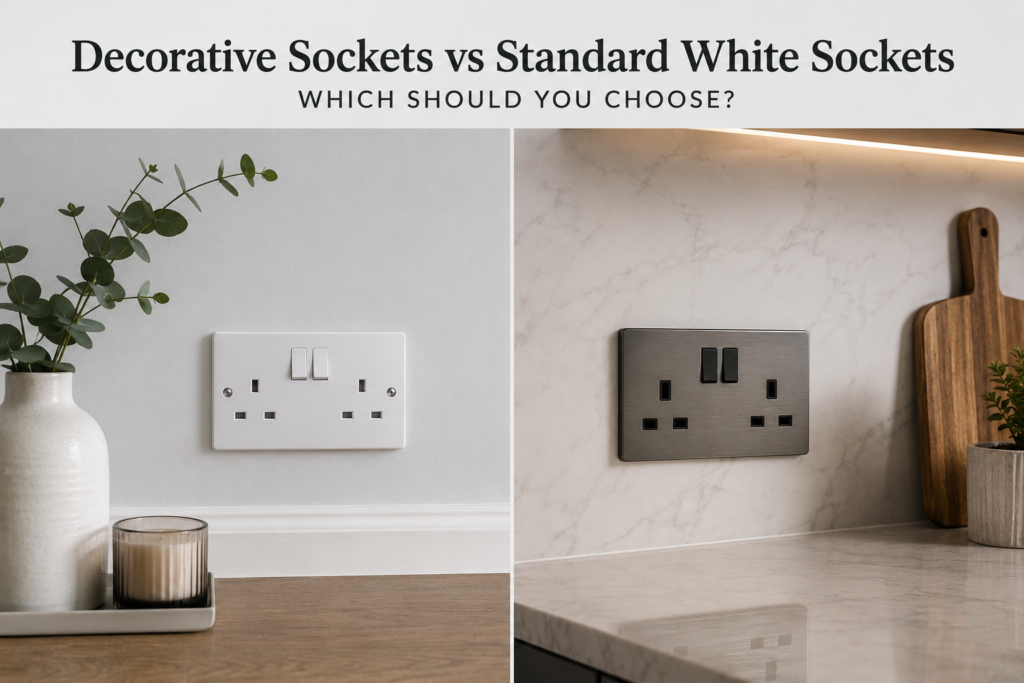
What Is a Standard White Socket?
A standard white socket is the familiar electrical outlet found in millions of UK homes. It is typically manufactured using durable white moulded plastic and is designed to provide a practical, unobtrusive solution for everyday electrical installations.
Because white accessories blend well with most painted walls, they have remained popular for decades and continue to be widely used in new-build properties, rental homes and commercial buildings.
Standard white sockets are commonly chosen because they:
- Have a clean and simple appearance.
- Suit almost every decorating style.
- Are usually the most affordable option.
- Are widely available in matching switches and accessories.
- Are easy to replace if damaged.
For many homeowners, a white socket is not intended to stand out. Instead, it quietly performs its function without drawing attention away from the rest of the room.
What Is a Decorative Socket?
A decorative socket is designed to offer the same electrical functionality as a standard socket while providing a more premium appearance.
Rather than plain white plastic, decorative ranges are available in a wide variety of colours, finishes and materials. These can be selected to complement modern kitchens, luxury bathrooms, period properties or contemporary interior designs.
Popular finishes include:
- Matt black.
- Brushed steel.
- Polished chrome.
- Brushed brass.
- Antique brass.
- Black nickel.
- Gunmetal.
- Glass faceplates.
- Matt white metal finishes.
Many decorative ranges also include matching light switches, fused connection units, cooker switches, data outlets and USB sockets, allowing every visible electrical accessory in the property to follow the same design style.
Which Looks Better?
Appearance is largely a matter of personal preference, but the style of the room should always influence the decision.
White sockets usually blend into light-coloured walls and create a subtle, understated look. Decorative sockets, by contrast, are often intended to become part of the interior design.
For example, brushed steel accessories may complement stainless-steel kitchen appliances, while matt black sockets can work well alongside black door furniture, window frames and modern lighting.
In period properties, antique brass or bronze finishes may better suit traditional architectural details than bright white plastic accessories.
Rather than asking which option is objectively better, it is more useful to consider which finish best complements the overall design of the room.
Are Decorative Sockets More Durable?
Durability depends far more on the quality of manufacture than on whether the socket is decorative or white.
A well-made decorative socket from a reputable manufacturer should provide many years of reliable service, just as a good-quality white socket should.
However, different finishes may age differently over time.
For example:
- Gloss surfaces may show fingerprints more easily.
- Highly polished finishes can reveal fine scratches.
- Matt finishes often hide marks better.
- Glass faceplates are easy to wipe clean but may show smudges more readily.
Regular gentle cleaning using products recommended by the manufacturer will usually help maintain the appearance of decorative finishes.
Which Type Is Easier to Keep Clean?
Most modern sockets are easy to clean with a soft, slightly damp cloth after the electrical accessory has been isolated where appropriate.
White plastic may gradually show signs of age in areas exposed to strong sunlight or heavy use, while decorative finishes may show fingerprints depending on their texture.
Matt finishes generally require less frequent polishing than highly reflective chrome or glass surfaces.
Regardless of the finish, abrasive cleaners, scouring pads and harsh chemicals should be avoided because they may damage the surface.
Are Decorative Sockets Worth the Extra Cost?
Decorative sockets usually cost more than standard white accessories because of the materials, manufacturing processes and finishes involved.
Whether the additional cost is worthwhile depends on the overall renovation budget and the importance of interior design within the project.
If you are investing in premium flooring, designer lighting, fitted furniture and high-quality decoration, decorative sockets often provide a more consistent finish.
On the other hand, if functionality is the main priority or the property is being refurbished on a tight budget, standard white sockets remain an excellent choice.
Many homeowners also choose a combination. Decorative sockets may be installed in the most visible living areas, while standard white accessories are used in utility rooms, lofts, garages and storage spaces.
Which Rooms Benefit Most from Decorative Sockets?
Decorative sockets can be used throughout the home, but they often make the biggest visual impact in rooms where electrical accessories are highly visible.
These include:
- Kitchens.
- Living rooms.
- Dining rooms.
- Home offices.
- Master bedrooms.
- Hallways.
In these areas, sockets are often positioned above worktops, beside televisions or near furniture where they remain clearly visible every day.
By contrast, sockets hidden behind wardrobes, refrigerators or washing machines are less likely to benefit from an expensive decorative finish.
Should All Sockets Match Throughout the House?
Not necessarily.
Many designers prefer to use one consistent finish throughout the main living areas because it creates a coordinated appearance.
However, there is nothing wrong with using different finishes where appropriate.
For example, a home may feature:
- Matt black accessories downstairs.
- White sockets in children’s bedrooms.
- Brushed steel sockets in the kitchen.
- Standard white accessories in the garage and utility room.
The important thing is that the choices appear intentional rather than random.
Should You Choose Screwless or Raised Plate Designs?
Many decorative collections are available in both raised plate and screwless designs.
Screwless faceplates provide a cleaner, more contemporary appearance because the fixing screws are hidden behind a removable front plate.
Raised plate accessories often suit more traditional interiors and can provide a distinctive visual detail around the edge of the faceplate.
Neither option is inherently better. The decision usually comes down to personal taste and the overall design style of the property.
Do Decorative Sockets Need Different Back Boxes?
Some decorative sockets require more installation depth than standard white accessories, but this is not true for every product.
The required back box depth depends on the design of the mechanism behind the faceplate rather than simply the finish on the front.
Always check the manufacturer’s installation requirements before purchasing replacement accessories.
Read our guide How to Choose the Right Back Box Depth in the UK for more information.
Can Decorative Sockets Include USB Charging?
Yes. Many decorative socket ranges are available with integrated USB-A, USB-C or combined charging ports.
This allows homeowners to enjoy both the appearance of decorative accessories and the convenience of built-in device charging.
When comparing USB models, remember that charging performance depends on the specification of the individual product rather than simply the presence of USB ports.
Read our guide USB Sockets vs Standard UK Sockets.
Which Finish Works Best in Modern Homes?
Modern interiors often feature simple lines, neutral colour palettes and coordinated finishes.
Popular choices include:
- Matt black.
- Brushed steel.
- Matt white metal.
- Black nickel.
- Glass faceplates.
The best option depends on the colours already present within the room. Choosing sockets that complement lighting, cabinet handles and furniture hardware often creates a more balanced result than selecting them in isolation.
Which Finish Suits Traditional Homes?
Older properties often benefit from warmer metallic finishes that complement traditional architecture.
Common choices include:
- Antique brass.
- Brushed brass.
- Bronze.
- Antique copper.
These finishes can work particularly well alongside timber floors, traditional fireplaces and classic interior detailing.
Are Decorative Sockets Suitable for Rental Properties?
They certainly can be, but the decision usually depends on the target market.
Higher-end rental properties may benefit from decorative accessories because they help create a premium impression.
For more budget-focused rentals, standard white sockets often provide an economical and practical solution that is easy to maintain and replace if necessary.
How Should You Choose Between Decorative and White Sockets?
Before making a decision, ask yourself:
- What style is the room?
- What finish do the door handles and lighting use?
- Will the sockets be highly visible?
- Am I renovating one room or the whole house?
- Do I want every accessory to match?
- What is my overall budget?
Thinking about the property as a whole often leads to a better result than selecting accessories room by room without an overall plan.
Common Mistakes When Choosing Decorative Sockets
- Choosing a finish that clashes with other metalwork.
- Mixing too many different finishes in the same room.
- Buying accessories before checking back box compatibility.
- Selecting products based only on photographs.
- Ignoring how visible fingerprints may be on polished finishes.
- Replacing sockets without considering matching switches.
Planning the complete room before ordering accessories usually produces a much more consistent and professional-looking result.
Frequently Asked Questions
Are decorative sockets as safe as white sockets?
Yes. When correctly manufactured, installed and used, decorative sockets should provide the same level of safety as standard white sockets.
Do decorative sockets scratch easily?
This depends on the finish. Highly polished surfaces may show fine scratches more readily than matt finishes.
Can decorative sockets be installed in every room?
Yes. They can be used throughout the home provided the chosen product is suitable for the intended installation.
Are screwless sockets better?
Screwless sockets provide a cleaner appearance, but neither screwless nor raised plate designs are technically superior. The choice is mainly aesthetic.
Should I replace my switches as well?
If you are changing sockets throughout a room, matching switches usually create a more coordinated finish.
Final Thoughts
Standard white sockets remain a practical, affordable and timeless choice for many homes, while decorative sockets allow electrical accessories to become part of the overall interior design.
Neither option is universally better. The right choice depends on the style of the property, the finishes already used throughout the room and the level of visual impact you want the electrical accessories to have.
By considering appearance, durability, maintenance, compatibility and future requirements before buying, you can create an installation that looks attractive and continues to meet your needs for many years.
Related Guides
- Single vs Double Sockets: Which Should You Choose?
- USB Sockets vs Standard UK Sockets
- How to Choose the Right Back Box Depth in the UK
- How Many Sockets Should a Room Have?
Further Reading
People Also Search For
- decorative sockets vs white sockets
- best socket finish for modern homes
- black sockets vs white sockets
- brushed steel sockets
- glass sockets UK
- are decorative sockets worth it
- screwless sockets vs raised plate
- modern electrical accessories UK
- matching switches and sockets
- premium socket finishes

Leave a comment