
Do Smart Thermostats Save Money on Heating Bills?
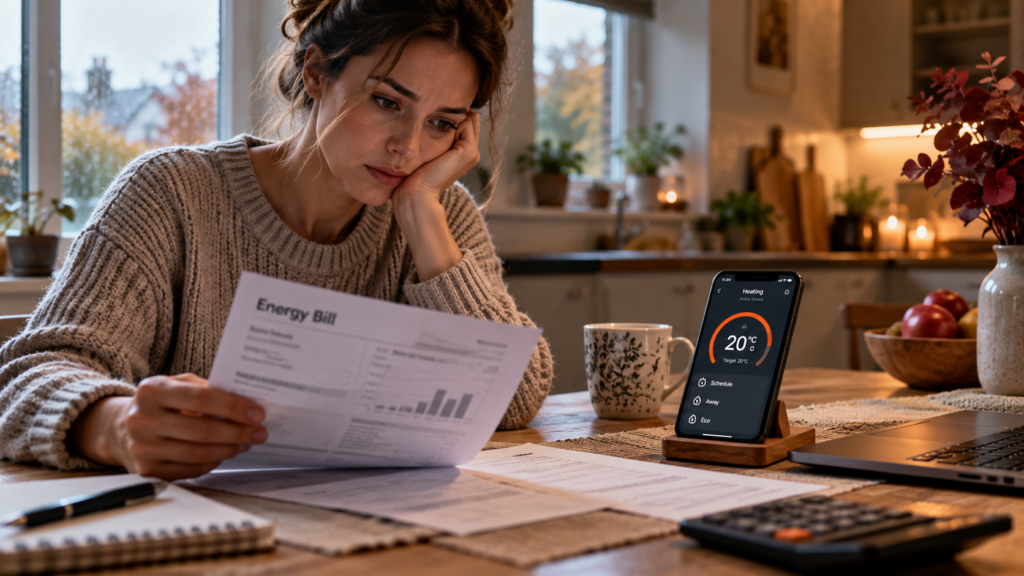
Smart thermostats promise more convenient heating control, but can they actually reduce your energy bills? If you’re considering replacing a traditional thermostat with a WiFi or Zigbee model, it’s worth understanding where potential savings come from before spending money on new equipment.
Yes, smart thermostats can help reduce heating bills, but savings aren’t guaranteed. The main benefit comes from controlling when your heating operates and what temperatures it maintains, rather than from the smart technology itself.
If you regularly heat an empty house, forget to adjust your thermostat or use the same heating schedule every day despite changing routines, smart controls may help you avoid unnecessary energy consumption.
However, if your existing heating controls are already well configured, installing a smart thermostat might make your heating more convenient without significantly reducing your bills.
This UK guide explains how smart thermostats can save energy, what affects the results, whether smart radiator valves make a difference and how to decide if an upgrade is worth the cost.
How Do Smart Thermostats Save Energy?
A smart thermostat doesn’t make your boiler or heating system inherently more efficient simply by connecting it to an app.
Instead, it gives you tools to manage heating more closely around your household’s needs.
Depending on the model, these may include programmable schedules, remote temperature adjustments, holiday settings and integration with other compatible smart heating devices.
The potential saving comes from using those features to reduce unnecessary heating.
1. Better Heating Schedules
One of the most useful smart thermostat features is the ability to create heating schedules.
For example, you might want your home warm before getting up in the morning, cooler while everyone is out and comfortable again during the evening.
Rather than leaving the heating at the same temperature all day, a suitable schedule can reduce the amount of time your heating system needs to maintain a higher temperature.
Traditional programmable thermostats can already do this, so the main advantage of a smart model is often easier adjustment and greater flexibility.
2. Remote Temperature Control
Imagine leaving home for the weekend and realising you’ve forgotten to lower the heating.
With a compatible smart thermostat and internet connection, you may be able to adjust the temperature from your phone.
Remote control can also be helpful when your working hours change or you’re returning home later than expected.
However, remote access only reduces energy consumption if you actually use it to avoid unnecessary heating.
3. Holiday and Away Modes
Some smart thermostats include holiday or away modes that maintain a lower temperature while your home is unoccupied.
These functions can make it easier to avoid heating your property to normal comfort temperatures when nobody is there.
Nevertheless, you should maintain suitable frost protection and consider the risk of condensation or damp during colder periods.
The appropriate minimum temperature depends on the building and household circumstances.
4. Room-by-Room Temperature Control
Some smart heating systems work with compatible thermostatic radiator valves or separate heating zones.
This can allow different rooms to operate according to individual temperature settings and schedules.
For example, a spare bedroom might need less heating than a living room used every evening.
Reducing unnecessary heat in selected rooms may help lower energy consumption when the wider heating system is configured correctly.
For more information, read our Smart Radiator Valves Explained guide.
How Much Money Can a Smart Thermostat Save in the UK?
There isn’t one reliable savings figure that applies to every UK household.
The amount depends on your existing heating controls, property insulation, heating system, energy tariff, target temperatures and how much heating you currently use.
According to the Energy Saving Trust, reducing a room thermostat setting by just 1°C can produce meaningful annual savings in a typical home, depending on the circumstances and energy prices used in the estimate.
However, this saving comes from maintaining a lower temperature, not specifically from owning a smart thermostat.
You could achieve a similar result with an appropriate conventional thermostat if it allows the same temperature adjustment.
Smart technology can make these changes easier to manage, particularly when your routine varies.
It’s important to distinguish between three situations:
- Replacing very basic heating controls: A smart thermostat may offer useful opportunities to reduce unnecessary heating.
- Replacing an existing programmable thermostat: The potential additional savings may be smaller if your current schedules are already effective.
- Replacing a well-configured smart thermostat: A newer model may offer extra convenience without necessarily reducing energy use further.
Before buying, consider how your existing system operates and which improvements you would realistically make.
How to Estimate Your Potential Heating Savings
You can make a rough assessment using your current heating expenditure and the percentage reduction in heating energy you might achieve.
For example, imagine a household spends £900 per year specifically on space heating.
If changes to heating schedules and target temperatures reduced that expenditure by 5%, the illustrative saving would be:
£900 × 5% = £45 per year.
At a 10% reduction, the saving would be £90 per year.
These are mathematical examples, not predictions of what a smart thermostat will achieve.
The 5% and 10% figures are hypothetical and don’t represent guaranteed savings or measured performance for a particular device.
When calculating potential savings, use the portion of your energy bill attributable to heating rather than automatically applying a percentage to your entire household bill.
Electricity used for appliances, lighting and other purposes won’t necessarily be affected by changing your heating controls.
Smart Thermostat Savings vs Purchase and Installation Costs
Even if a smart thermostat reduces heating costs, you should consider how much the upgrade costs before deciding whether it offers good financial value.
Possible expenses include:
- The thermostat itself.
- A compatible receiver or Zigbee gateway, where required.
- Professional installation or wiring modifications.
- Additional room sensors or smart radiator valves.
- Replacement batteries for battery-powered devices.
One way to assess the investment is to calculate the simple payback period.
Payback period = Total installation cost ÷ Annual savings
For example, if your complete upgrade costs £120 and produces a genuine £40 annual saving, the simple payback period would be three years.
However, if the same system saves only £10 annually, the payback period would be twelve years.
These examples exclude maintenance, energy price changes and the time value of money.
This is why the cheapest suitable thermostat isn’t always the best choice, but the most expensive model isn’t automatically a better investment either.
Are Smart Thermostats Worth It If You Already Have a Programmer?
If you already have a programmable room thermostat, you may be able to manage heating schedules effectively without upgrading.
A conventional programmer can turn heating on and off at selected times, while a programmable thermostat may also allow different target temperatures throughout the day.
If your heating schedule is already carefully matched to your routine, replacing these controls with a smart version may offer limited additional energy savings.
However, smart controls can still provide benefits such as easier scheduling, remote adjustments and compatibility with other supported smart home devices.
Ask yourself whether you would regularly use these additional functions.
If you work different shifts, travel frequently or find your existing controls difficult to programme, a smart thermostat could make managing heating easier.
For help comparing features, see our UK Smart Thermostat Buying Guide.
Can Smart Radiator Valves Reduce Heating Bills Further?
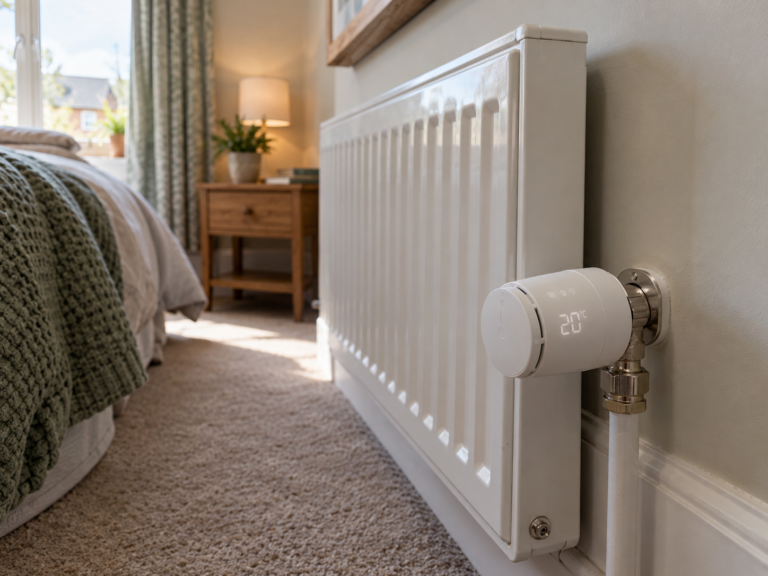
Smart thermostatic radiator valves, also known as smart TRVs, allow individual radiator temperatures to be managed more precisely.
This can be useful in homes where different rooms are occupied at different times.
For example, a household might use a home office during the day and a living room during the evening.
With compatible smart radiator valves, those rooms can have different programmed temperature targets.
However, there are two important limitations.
First, traditional thermostatic radiator valves already reduce heat output when rooms reach their selected temperatures.
Second, smart TRVs don’t automatically control boiler demand unless they’re part of a compatible integrated heating system.
If your central heating is off, opening a smart radiator valve won’t necessarily make hot water available to that radiator.
The additional energy benefit of smart TRVs therefore depends on your existing controls and how the overall heating system operates.
Our Smart Thermostat vs Smart Radiator Valves comparison explains how both devices can work together.
Do WiFi and Zigbee Thermostats Save Different Amounts of Energy?
WiFi and Zigbee describe how smart devices communicate, not how efficiently they heat your home.
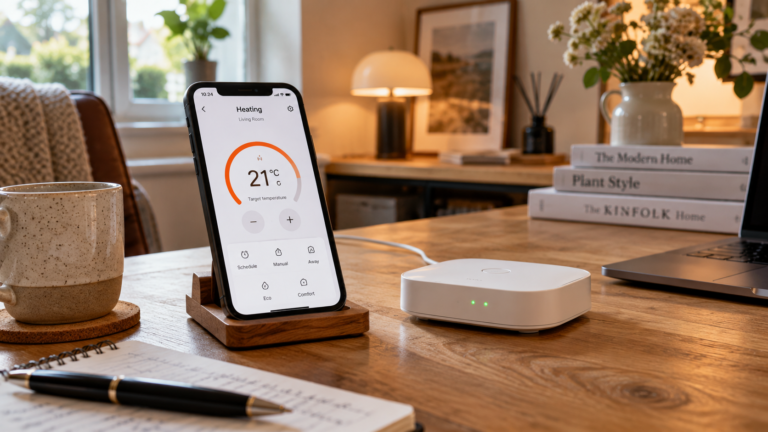
A WiFi thermostat connects through a compatible wireless network, while a Zigbee thermostat generally operates through a supported Zigbee network and gateway.
Both may offer smartphone control, programmable schedules and integration with other smart home equipment.
Neither WiFi nor Zigbee automatically produces greater heating savings.
The difference comes from the thermostat’s actual control functions, how they’re configured and whether they’re compatible with your heating system.
Zigbee can be useful for connecting several compatible smart radiator valves and sensors, while WiFi may be simpler for a standalone thermostat.
Read our WiFi vs Zigbee Smart Thermostats guide to compare their connectivity, gateway requirements and practical advantages.
If you’re considering a Zigbee setup, our guide to Zigbee hubs and gateways explains what equipment you may need.
Do Smart Thermostats Work Better With Certain Boilers?
The type of boiler and control system can influence the benefits available from a smart thermostat.
Some boilers use conventional on/off heating controls, while others support compatible modulating communication systems.
A suitable modulating controller may allow a compatible boiler to adjust its heating output according to demand rather than relying solely on basic on/off commands.
However, this functionality depends on the specific boiler and thermostat combination.
A thermostat advertised as smart, WiFi or Zigbee should never be assumed to support OpenTherm or another modulating protocol.
Replacing an existing modulating controller with an incompatible on/off controller could mean losing some control functions.
Before upgrading, check the exact boiler make and model and the supported control method.
Our Smart Thermostat Boiler Compatibility Guide explains these differences in more detail.
What About Smart Thermostats for Underfloor Heating?
Underfloor heating behaves differently from conventional radiators, particularly in systems where the floor structure stores a substantial amount of heat.
Some installations respond relatively slowly to changes in thermostat settings.
This means repeatedly turning the heating off and expecting the room to warm up immediately may not be the most practical approach.
Smart scheduling can still be useful, especially when it reflects the heating system’s response time and the household’s routine.
Electric and water-based underfloor heating also have different control requirements, so choosing the correct thermostat is essential.
To understand these differences, see our guide to choosing smart thermostats for underfloor heating.
Seven Ways to Get More Value From a Smart Thermostat
Buying the thermostat is only the first step. How you use it determines whether it delivers practical benefits.
1. Start With a Comfortable Target Temperature
Choose the lowest temperature that keeps your household comfortable and safe.
Energy Saving Trust generally recommends a comfortable room thermostat setting in the region of 18°C to 21°C for many households, although individual requirements differ.
People who are older, very young or have particular health needs may require warmer conditions.
2. Match Heating Schedules to Your Routine
Review when your home is occupied and when higher temperatures are genuinely needed.
If your routine changes, update the schedule rather than leaving the system running on outdated settings.
3. Use Away and Holiday Settings Appropriately
When you’re away, consider reducing unnecessary heating while maintaining suitable frost and building protection.
Avoid settings that allow the property to become excessively cold or damp.
4. Check the Thermostat Location
A thermostat positioned next to a heat source, in direct sunlight or in an unusually cold area may measure temperatures that don’t represent the main living space.
Correct positioning helps the heating system respond appropriately.
5. Review Individual Room Temperatures
If your system supports separate zones or compatible smart TRVs, check whether unused rooms are being heated more than necessary.
Remember that excessively low temperatures can increase the risk of condensation and damp.
6. Avoid Constant Manual Overrides
Regularly overriding your programmed schedule may reduce its effectiveness.
If you find yourself adjusting the temperature every day, consider changing the underlying schedule to match your routine more closely.
7. Compare Heating Use Over Time
If you have reliable energy consumption data, compare similar periods before and after changing your controls.
Take account of outdoor temperatures, occupancy and energy prices when interpreting the results.
A lower bill doesn’t always mean lower energy consumption, just as a higher bill doesn’t necessarily mean your heating controls are working less efficiently.
Common Mistakes That Prevent Smart Thermostat Savings
Even a well-designed smart heating system may deliver little financial benefit if it isn’t configured appropriately.
Common mistakes include:
- Maintaining the same high temperatures: A smart thermostat doesn’t save energy if heating demand remains unchanged.
- Leaving outdated schedules active: Heating an empty home unnecessarily can offset potential benefits.
- Assuming remote access equals efficiency: An app makes adjustments easier but doesn’t guarantee energy savings.
- Using incompatible heating controls: A poorly matched thermostat may lose important system functions.
- Confusing smart TRVs with boiler controllers: Independent room temperature settings don’t necessarily provide independent boiler demand.
- Ignoring installation costs: Additional equipment can significantly affect financial payback.
- Comparing bills without considering weather: A colder winter can increase energy use even when controls are more effective.
Understanding these limitations helps set realistic expectations before making a purchase.
Smart Heating Controls at PYC Online
If you’re considering upgrading your heating controls, PYC Online offers WiFi and Zigbee thermostats and smart radiator valves for different applications.
Wireless Smart Boiler Thermostat
Our Wireless Smart Boiler Thermostat is available in WiFi and Zigbee versions for suitable dry-contact boiler control installations.
It supports programmable schedules, compatible app-based temperature adjustments and other smart heating functions.
The correct version and control requirements should be confirmed before ordering.
Zigbee Smart Radiator Valve
For compatible radiator systems, our Zigbee Smart Radiator Valve offers programmable temperature control through the Tuya Smart Life platform.
It requires a compatible Tuya Zigbee gateway for connected functions and is intended to regulate individual radiator temperatures.
Whether it can participate in coordinated boiler demand depends on the wider heating system integration.
Smart Thermostats for Different Heating Systems
Our Zigbee Smart Knob Thermostat comes in separate versions intended for suitable boiler, electric heating and water-based heating applications.
These versions are not interchangeable, so choosing the correct model for your installation is essential.
Explore our Smart Thermostat and Heating Controls collection to compare available options.
Is a Smart Thermostat Worth Buying?
A smart thermostat may be worth buying if it solves a problem with your existing heating controls.
For example, it can be useful when you want:
- More flexible heating schedules.
- Remote temperature control when you’re away.
- Easier management of changing working hours.
- Integration with compatible smart home equipment.
- Additional control over room temperatures through a supported heating system.
However, if your existing programmable thermostat already meets your needs and your heating is efficiently managed, the additional financial benefit may be limited.
Think about both the potential energy savings and the value of everyday convenience.
For some households, easier heating management may justify the investment even if the system takes several years to recover its purchase cost.
For others, adjusting an existing thermostat and improving the current heating schedule may be the more economical option.
Frequently Asked Questions
Do smart thermostats really reduce heating bills?
They can help reduce unnecessary heating through better scheduling, remote adjustments and compatible room controls. However, savings depend on your existing system and how you use the thermostat.
How much can a smart thermostat save per year in the UK?
There is no guaranteed annual saving. Results depend on heating expenditure, current controls, property characteristics, temperatures and household habits. Savings estimates for improved heating controls shouldn’t automatically be attributed to smart thermostats alone.
Are smart thermostats worth it for small homes?
They can be, particularly if you want flexible schedules or remote control. However, smaller properties with low heating expenditure may have less scope for financial savings, so purchase and installation costs matter.
Do smart radiator valves save money?
They may help reduce unnecessary heating in selected rooms, especially when used with a suitable central heating system. However, traditional TRVs already regulate radiator temperatures, and smart valves don’t automatically control boiler demand.
Is a Zigbee thermostat more energy efficient than WiFi?
Neither technology automatically reduces home heating energy consumption more than the other. Heating savings depend primarily on control functions, temperature settings and system compatibility.
Can a smart thermostat save money with a combi boiler?
Yes, a compatible smart thermostat may help reduce unnecessary heating with a combi boiler. The benefit depends on your existing controls and how the heating is managed.
Does turning the thermostat down by 1°C save money?
Reducing the temperature you maintain can lower heating demand and energy consumption. The actual saving depends on your home, heating system, energy prices and how long the lower setting is used.
Should I leave smart heating on all day?
Not necessarily. The most appropriate schedule depends on your heating system, insulation, occupancy and household needs. Some systems, including certain underfloor heating installations, may benefit from more gradual temperature changes rather than frequent large adjustments.
Will a smart thermostat save money if I already have a programmable thermostat?
Possibly, but additional savings may be limited if your existing schedule and temperature settings are already effective. The main benefits may be convenience and easier control.
Final Thoughts
Smart thermostats can help reduce heating bills, but the savings come from better heating management rather than simply installing a connected device.
If you currently heat your home unnecessarily, struggle with changing schedules or want more control over individual rooms, suitable smart heating equipment may be a worthwhile upgrade.
However, replacing an effective existing thermostat doesn’t automatically make your heating more efficient.
Before investing, check your heating system compatibility, consider the full installation cost and identify which functions would genuinely improve your daily routine.
The best smart heating setup is one that maintains comfort, avoids unnecessary energy use and works correctly with your home.
Related Guides
- How to Choose a Smart Thermostat for Your Home: UK Buying Guide
- WiFi vs Zigbee Smart Thermostats: Which Is Better?
- Will a Smart Thermostat Work With My Boiler?
- Smart Thermostat vs Smart Radiator Valves: What’s the Difference?
- Smart Radiator Valves Explained: How They Work and What You Need
- Best Smart Thermostats for Underfloor Heating: What to Look For
- Do You Need a Zigbee Hub for a Smart Thermostat or Radiator Valve?
Further Reading
- Energy Saving Trust: The Most Economical Ways to Use Your Central Heating – UK guidance on managing heating costs, temperatures and smart controls.
- Energy Saving Trust: Heating Controls – Information about thermostats, programmers and radiator valves.
- Ofgem: Energy Advice for Households – Information about domestic energy costs, support and energy use.
People Also Search For
do smart thermostats save money, smart thermostat savings UK, are smart thermostats worth it, smart thermostat energy savings, smart thermostat heating bills, how much does a smart thermostat save, energy saving thermostat UK, smart radiator valve savings, reduce gas heating bills, programmable thermostat vs smart thermostat, smart heating controls, save money on central heating, wifi thermostat energy saving, zigbee thermostat energy efficiency, smart thermostat payback period, lower heating bills UK

Leave a comment