
What Is a Shaver Socket? A Complete UK Guide
What Is a Shaver Socket? A Complete UK Guide
A shaver socket is a specially designed bathroom socket that provides a safe way to power electric shavers and toothbrush chargers. Unlike a standard UK 13A socket, it uses an isolating transformer to reduce the risk of electric shock in wet environments.
If you have ever stayed in a hotel or looked closely at a modern bathroom, you have probably noticed a small socket labelled “Shavers Only”. Although it may look similar to a normal electrical outlet, it is designed for a very specific purpose and should not be used to power everyday appliances.
In this guide, we’ll explain what a shaver socket is, how it works, where it can be installed and why it is different from a standard UK socket.
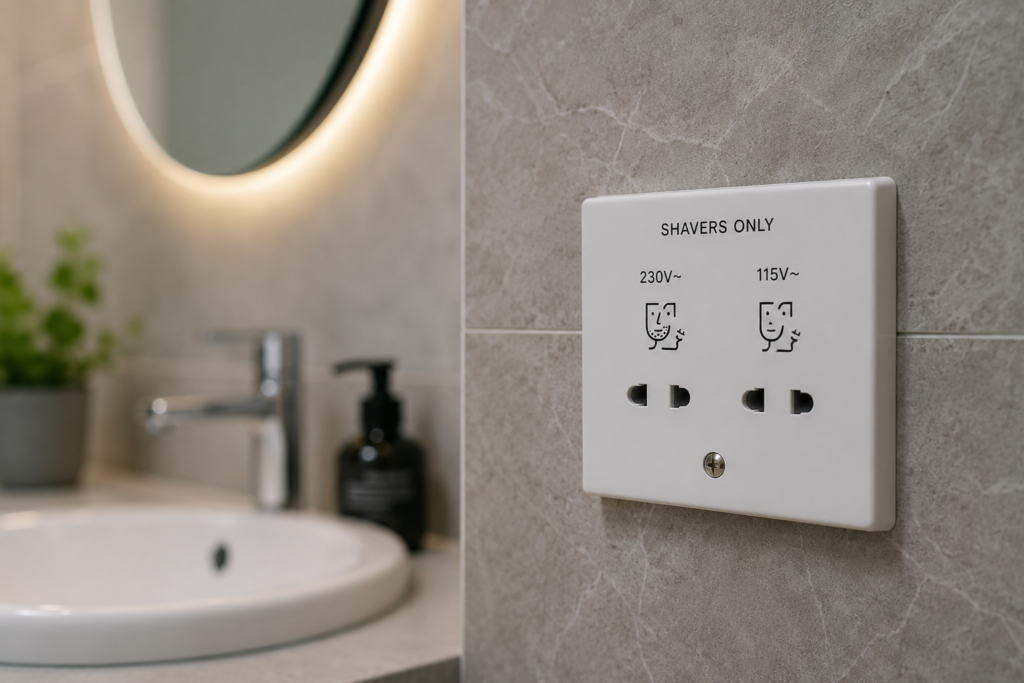
What Is a Shaver Socket?
A shaver socket is a bathroom electrical outlet designed specifically for low-power appliances such as electric shavers and electric toothbrush chargers.
Unlike a standard socket, it contains an isolating transformer that electrically separates the output from the mains supply. This provides an additional level of protection that makes the socket suitable for use in bathrooms when installed correctly.
Most UK shaver sockets include:
- A 230V outlet for UK shaver plugs.
- A 115V outlet for international shavers.
- An isolating transformer built into the unit.
- Clear “Shavers Only” markings.
The transformer is one of the main reasons these sockets are larger and usually more expensive than standard wall sockets.
How Does a Shaver Socket Work?
The key feature of a shaver socket is its built-in isolating transformer.
Rather than supplying power directly from the mains, the transformer provides electrical isolation between the incoming supply and the output. This helps reduce the risk of electric shock if a fault occurs.
The transformer is intended only for low-power devices and is not designed to supply the higher current required by household appliances.
Why Can’t You Use a Standard Socket in a Bathroom?
Bathrooms present a greater electrical risk because water significantly increases the likelihood of electric shock.
For this reason, UK electrical installation rules place strict limitations on where standard socket outlets may be installed.
A normal 13A socket should not be installed close to baths or showers. In most homes, standard sockets are located outside the bathroom unless specific installation requirements can be met.
Shaver sockets are treated differently because they are designed for a limited purpose and incorporate an isolating transformer.
What Can You Plug Into a Shaver Socket?
Shaver sockets are intended for small personal care appliances.
Suitable devices include:
- Electric shavers.
- Electric toothbrush chargers.
- Some beard trimmers.
- Other compatible low-power grooming devices approved by the manufacturer.
Before using any appliance, always check that it is compatible with the voltage provided by the socket.
What Should You Not Plug Into a Shaver Socket?
Shaver sockets are not designed to power high-demand appliances.
You should not use them for:
- Hair dryers.
- Hair straighteners.
- Curling tongs.
- Portable heaters.
- Kettles.
- Extension leads.
These appliances typically require far more power than a shaver socket is designed to provide.
Why Do Many Shaver Sockets Have 115V and 230V?
Many shaver sockets include both 115V and 230V outputs.
This allows compatible shavers from different countries to be used without a separate voltage converter. The 230V outlet is intended for UK-compatible appliances, while the 115V outlet is commonly used with appliances designed for countries that use lower mains voltages.
The available voltage does not mean every appliance can be used. The socket remains intended for low-power grooming products only.
Where Can a Shaver Socket Be Installed?
A shaver socket should be installed in accordance with the current UK electrical installation requirements.
The exact permitted location depends on the layout of the bathroom and the applicable wiring regulations.
When planning an installation, factors such as distance from baths, showers and wash basins should always be considered.
If you are unsure where a shaver socket may be installed safely, consult a qualified electrician.
Are Shaver Sockets Safe?
Yes, when they are correctly manufactured, properly installed and used for their intended purpose.
As with any electrical accessory, the socket should not be used if it is damaged or shows signs of overheating.
Stop using the socket if you notice:
- A burning smell.
- Discolouration.
- Loose fittings.
- Buzzing or crackling noises.
- Visible damage to the faceplate.
Can You Charge a Phone from a Shaver Socket?
Some people wonder whether a phone charger can be plugged into a shaver socket.
Although certain chargers may physically fit by using an adaptor, shaver sockets are not intended as general-purpose charging points.
For routine phone charging, a standard socket or a suitable USB wall socket is normally the better option.
Read our guide USB Sockets vs Standard UK Sockets to learn more.
Do You Need a Shaver Socket?
Not every bathroom requires a shaver socket, but many homeowners choose to install one because it provides a convenient place to charge an electric toothbrush or use an electric shaver.
They are particularly common in hotels, en-suite bathrooms and modern bathroom renovations.
How to Choose the Right Shaver Socket
When buying a shaver socket, consider:
- The style and finish.
- Whether it matches your existing switches and sockets.
- The voltage options provided.
- The installation depth required.
- The reputation of the manufacturer.
If you are updating several electrical accessories throughout your home, choosing matching finishes can create a more consistent appearance.
Frequently Asked Questions
What is a shaver socket used for?
It is designed for low-power grooming appliances such as electric shavers and toothbrush chargers.
Can I plug a hair dryer into a shaver socket?
No. Hair dryers generally require much more power than a shaver socket is designed to provide.
Why does a shaver socket have an isolating transformer?
The transformer provides electrical isolation between the mains supply and the output, improving safety when used correctly in bathroom environments.
Can I install a normal socket in my bathroom?
Standard socket outlets are subject to strict installation requirements in UK bathrooms. A qualified electrician should determine whether an installation is permitted.
Can I charge an electric toothbrush from a shaver socket?
Yes, many electric toothbrush chargers are specifically designed for use with bathroom shaver sockets.
Final Thoughts
A shaver socket is a specialised electrical accessory designed to provide a safe and convenient power supply for electric shavers and toothbrush chargers in bathrooms.
Although it looks similar to a standard socket, its built-in isolating transformer and intended purpose make it a completely different type of electrical outlet.
If you are planning a bathroom renovation, a shaver socket can be a practical addition, provided it is installed correctly and used only with suitable low-power appliances.
Related Guides
- Single vs Double Sockets: Which Should You Choose?
- Switched vs Unswitched Sockets: What’s the Difference?
- USB Sockets vs Standard UK Sockets
- How to Choose the Right Back Box Depth in the UK
Further Reading
- Electrical Safety First
- Institution of Engineering and Technology (IET)
- British Standards Institution (BSI)
People Also Search For
- what is a shaver socket
- can you charge a toothbrush in a shaver socket
- can you plug a hair dryer into a shaver socket
- bathroom shaver socket UK
- 115V and 230V shaver socket
- shaver socket safety
- shaver socket regulations UK
- difference between a shaver socket and a normal socket

Leave a comment