
How Many Sockets Should a Room Have? A Practical UK Guide
How Many Sockets Should a Room Have? A Practical UK Guide
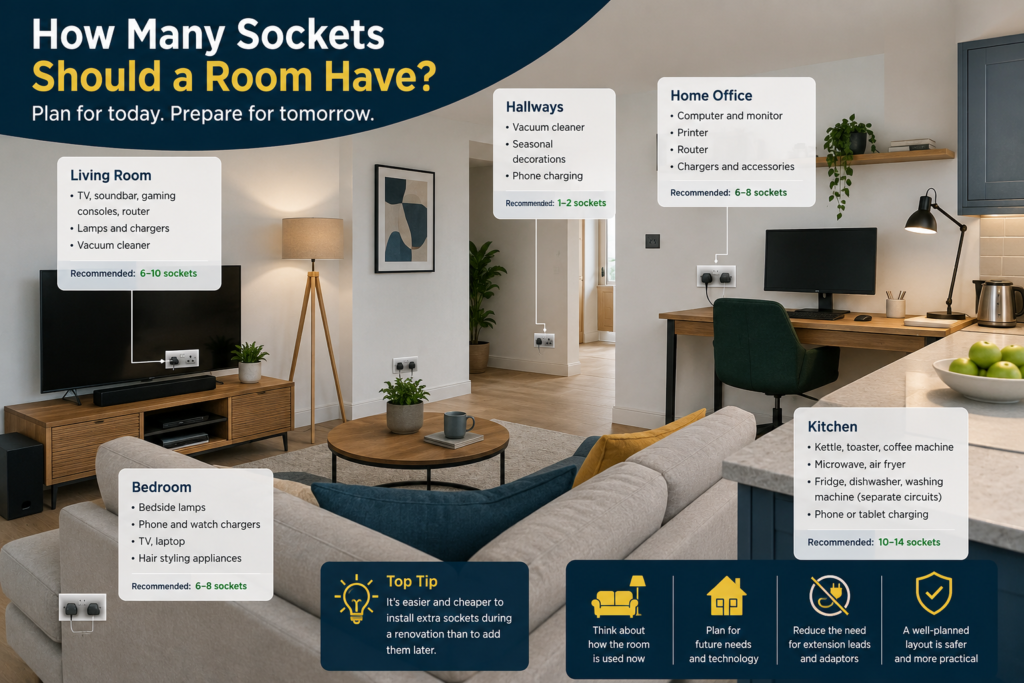
There is no single legal rule stating exactly how many sockets every room in a UK home must contain. The right number depends on how the room will be used, the appliances and devices that need power and whether you want to avoid relying on extension leads and multi-plug adaptors.
One of the most common mistakes made during renovations and new electrical installations is fitting too few sockets. A room may appear to need only a small number of outlets when it is empty, but once furniture, lamps, chargers, televisions and other appliances are added, the available sockets can quickly become insufficient.
Adding extra sockets while walls are already being opened, plastered or redecorated is normally much easier than returning to the job later. Careful planning at the beginning can make the finished room more practical, reduce cable clutter and give you more freedom to rearrange furniture in the future.
In this guide, we explain how to decide how many sockets each room should have, where they should be positioned and what to consider when planning for future needs rather than only today’s requirements.
Is There a Minimum Number of Sockets Required?
There is no universal rule in UK legislation that assigns a fixed number of socket outlets to every bedroom, living room or kitchen.
Instead, an electrical installation should be designed to suit the intended use of the property. This means considering the size of the room, the expected furniture layout, the equipment likely to be connected and the needs of the people using the space.
A small guest bedroom, for example, may need fewer sockets than a large main bedroom containing a television, bedside lamps, chargers and a dressing area. Similarly, a simple kitchen may have different requirements from a large open-plan kitchen with several countertop appliances.
The important point is that the sockets should be conveniently located and sufficient for normal use. A poorly planned room may technically have working power outlets while still being inconvenient because they are hidden behind furniture or concentrated in the wrong place.
Why Is It Better to Install Enough Sockets?
Modern homes use considerably more electrical and electronic equipment than properties built several decades ago. In addition to traditional appliances, many households now regularly charge phones, tablets, smart watches, headphones, laptops, speakers and other portable devices.
Installing enough sockets can provide several practical benefits:
- Less reliance on extension leads.
- Fewer multi-plug adaptors.
- A tidier and more organised appearance.
- Greater flexibility when moving furniture.
- More convenient charging locations.
- Better preparation for future electrical devices.
- Less need to unplug one appliance before using another.
Extension leads can be useful for occasional or temporary use, but they are not always the best answer to a room that permanently lacks sufficient outlets.
A well-planned installation allows appliances to be connected where they are actually used. It also helps avoid situations where cables have to run behind beds, across floors or around furniture simply because the nearest socket is in the wrong location.
How Should You Calculate the Number of Sockets?
Rather than choosing an arbitrary number, start by listing every device that may normally be used in the room.
Then divide the list into three groups:
- Items that will remain connected permanently.
- Items that will be connected regularly.
- Items that only need occasional access to a socket.
Permanent equipment might include a television, router, computer or bedside lamp. Regularly connected items may include phone chargers, hair styling appliances or kitchen equipment. Occasional items may include a vacuum cleaner, portable heater or seasonal lighting.
Once you have counted the likely devices, add some spare capacity. Installing exactly one outlet for every current appliance leaves no flexibility if you later add another lamp, charger, monitor or smart home device.
It is often better to provide several well-positioned double sockets than to install the absolute minimum and rely on adaptors later.
How Many Sockets Should a Living Room Have?
Living rooms often contain more electrical equipment than people initially expect. The television area alone may require several outlets before any lamps or chargers are considered.
Typical equipment may include:
- Television.
- Soundbar or speaker system.
- Games console.
- Streaming device.
- Broadband router.
- Table lamps or floor lamps.
- Phone and tablet chargers.
- Electric recliner furniture.
- Vacuum cleaner.
- Christmas decorations or seasonal lighting.
A television wall or media unit may need two or more double sockets, depending on the number of devices. It is worth remembering that some equipment uses larger plug-in power supplies, which can block part of an adjacent socket.
Additional outlets should normally be distributed around the room rather than placed only behind the television. Sockets beside a sofa can be useful for charging phones, powering a table lamp or connecting an electric recliner.
Think about alternative furniture arrangements as well. If every socket is installed around one wall, changing the position of the sofa or television later may become difficult.
How Many Sockets Should a Bedroom Have?
Bedrooms commonly need sockets on both sides of the bed as well as additional outlets for other furniture and appliances.
Typical bedroom devices include:
- Bedside lamps.
- Phone chargers.
- Smart watch and headphone chargers.
- Alarm clocks.
- Electric blankets.
- Hair dryers and styling appliances.
- Televisions.
- Laptops.
- Fans or air purifiers.
A double socket on each side of the bed is often more practical than one socket shared between two people. It allows a lamp and charger to remain connected without the need for an adaptor.
If the room includes a dressing table, a separate socket nearby may be useful for hair dryers, straighteners and other grooming appliances. This can reduce the temptation to trail cables across the room from a socket beside the bed.
Children’s bedrooms may also need to adapt over time. A room that currently contains only a night light may later require charging points, a desk lamp, a computer or a television.
Read our guide Single vs Double Sockets: Which Should You Choose?.
How Many Sockets Should a Kitchen Have?
Kitchens normally require more careful socket planning than any other room because they combine fixed appliances with portable countertop equipment.
Typical worktop appliances include:
- Kettle.
- Toaster.
- Coffee machine.
- Microwave.
- Air fryer.
- Food processor.
- Blender.
- Slow cooker.
- Phone or tablet charger.
Separate supplies or accessible connection points may also be needed for fixed appliances such as fridges, freezers, dishwashers, washing machines and cooker hoods, depending on the design of the kitchen and the appliance requirements.
When planning sockets above a worktop, consider which appliances are likely to remain connected and which are only brought out when needed. If the kettle, toaster and coffee machine are used every day, they may already occupy several outlets before occasional appliances are added.
A kitchen island may also need its own carefully planned power provision if it will be used for food preparation, small appliances or charging devices.
Socket positions should be planned around sinks, hobs, worktop joints and appliances rather than simply spaced evenly along the wall. The final locations should be both safe and convenient.
How Many Sockets Should a Home Office Have?
A modern home office can use a surprisingly large number of outlets, particularly when several devices remain connected all day.
A typical setup may include:
- Desktop computer or laptop charger.
- One or more monitors.
- Printer.
- Desk lamp.
- Phone charger.
- Headphone charger.
- Broadband router.
- Speakers.
- External hard drives.
- Docking station.
Where possible, install sockets close to the expected desk position and consider how cables will be routed. Outlets located too far from the desk may lead to extension leads running across the floor or being crowded behind furniture.
It is also sensible to include spare capacity. A home office that currently uses a laptop may later gain a second monitor, printer, docking station or other equipment.
For a permanent office setup, several double sockets usually provide a cleaner solution than one outlet connected to a large extension block.
How Many Sockets Should a Dining Room Have?
Dining rooms are sometimes given very few sockets because they contain less obvious electrical equipment than living rooms or kitchens.
However, outlets may still be needed for:
- Table lamps.
- Sideboard lighting.
- Laptop use.
- Phone charging.
- Occasional food-warming appliances.
- Seasonal decorations.
- Vacuum cleaning.
In an open-plan home, the dining area may also double as a workspace or homework area. A conveniently positioned socket can make the space much more versatile.
Do Hallways Need Sockets?
Hallways are often overlooked during electrical planning, but even one or two well-positioned outlets can be useful.
A hallway socket may provide power for:
- A vacuum cleaner.
- Seasonal decorations.
- A console table lamp.
- A smart home hub.
- A Wi-Fi extender.
- Temporary phone charging.
In longer hallways or on landings, more than one outlet may be useful so that a vacuum cleaner can reach different areas without moving an extension lead between rooms.
How Many Sockets Should a Utility Room Have?
Utility rooms often contain several fixed appliances and may also be used for ironing, charging cleaning equipment or operating small household devices.
Possible electrical items include:
- Washing machine.
- Tumble dryer.
- Freezer.
- Iron.
- Vacuum cleaner charger.
- Dehumidifier.
- Cleaning equipment.
Each appliance should be considered individually, and access for isolation or maintenance should form part of the design.
It is also worth allowing at least one conveniently accessible outlet for temporary use rather than placing every connection behind heavy appliances.
How Many Sockets Should a Garage Have?
Garages can require anything from one simple socket to a much more extensive electrical setup, depending on how the space is used.
Possible equipment may include:
- Power tools.
- Battery chargers.
- Freezers.
- Garden equipment.
- Workshop lighting.
- Pressure washers.
- Vacuum cleaners.
If the garage is used as a workshop, sockets should be positioned close to workbenches while remaining protected from impact, damp and dust where necessary.
You should also think about future requirements, including the possible installation of additional equipment or electric vehicle charging. An EV charger is not simply another general-purpose socket and requires separate professional assessment and installation.
Should You Avoid Extension Leads?
Extension leads are useful when electrical equipment is used temporarily, but they should not normally be treated as a permanent substitute for adequate fixed sockets.
Problems may arise when extension leads are hidden under rugs, trapped behind furniture or connected together. They can also create a trip hazard when cables cross walkways.
Overloading is another concern. An extension lead may have several outlets, but that does not mean every connected appliance can safely operate at full power at the same time.
Where a room depends on extension leads every day, it may be a sign that the fixed socket layout no longer meets the needs of the household.
Should You Install USB Sockets?
USB wall sockets can be useful in areas where phones, tablets and other devices are regularly charged.
They may be particularly convenient beside beds, near desks or in a kitchen charging area because they leave the standard plug outlets available for other appliances.
However, USB sockets should not necessarily replace standard outlets throughout the home. Charging technology changes more quickly than conventional sockets, and the performance of built-in USB ports varies between products.
A mixed approach is often the most practical. Standard sockets can be used throughout the property, with USB sockets added in carefully selected locations where they offer a clear benefit.
Learn more in our guide USB Sockets vs Standard UK Sockets.
Where Should Sockets Be Positioned?
The number of sockets matters, but their position is equally important.
A room can have several outlets and still be inconvenient if they are all hidden behind wardrobes, beds or kitchen units.
Before installation, mark the expected positions of:
- Beds and bedside cabinets.
- Sofas and armchairs.
- Television units.
- Desks.
- Wardrobes.
- Kitchen appliances.
- Dining furniture.
Think about where plugs need to remain accessible and where cables will run. An outlet behind a heavy appliance may be appropriate for a fixed connection, but it may be unsuitable for something that needs to be unplugged regularly.
It is also wise to avoid positioning every socket according to only one furniture layout. Rooms often change over time, and spare outlets on other walls provide useful flexibility.
Should You Install Single or Double Sockets?
Double sockets are normally the most flexible option in general living spaces because they provide two outlets without taking up substantially more wall space than a single socket.
Single sockets can still be appropriate for dedicated appliances, narrow locations or concealed installations where only one connection is required.
For bedrooms, living rooms, dining rooms and offices, double sockets are usually the more practical choice. In kitchens and utility rooms, a mixture of single and double outlets may be used depending on the appliances and layout.
How Should You Plan for Future Needs?
When deciding how many sockets to install, think beyond the way the room is used today.
Ask yourself:
- Could the room become a home office?
- Will children need more charging points as they grow?
- Might you add a television or entertainment system?
- Could furniture be rearranged?
- Will more smart home devices be added?
- Are you likely to buy more kitchen appliances?
- Could the room later be used by two people instead of one?
Future-proofing does not mean covering every wall with outlets. It means adding sensible spare capacity in locations where it is likely to be useful.
An extra double socket fitted during a renovation may cost relatively little compared with the disruption of chasing walls and redecorating later.
Common Mistakes When Planning Socket Locations
Good socket planning involves more than counting how many outlets are shown on a drawing.
Common mistakes include:
- Installing too few sockets.
- Concentrating every socket in one part of the room.
- Placing sockets where furniture blocks access.
- Forgetting about television and broadband equipment.
- Not allowing spare outlets above kitchen worktops.
- Ignoring charging requirements.
- Failing to plan around a bed or desk layout.
- Relying on extension leads as a permanent solution.
- Not considering future uses of the room.
Another common mistake is choosing decorative sockets before checking whether the back boxes are deep enough. Some decorative, USB and smart accessories require more space behind the faceplate than a basic standard socket.
Read How to Choose the Right Back Box Depth in the UK for more information.
Should New Builds Have More Sockets?
When planning a new build or major renovation, it is usually sensible to provide more sockets than the absolute minimum needed for current furniture and equipment.
At this stage, the locations can be planned before walls are finished, which makes it easier to create a balanced layout.
Walk through each room on the plan and imagine how it will actually be used. Think about where someone will sit, sleep, work, cook and charge devices.
This practical exercise often identifies missing outlets that are not obvious on a basic electrical drawing.
What If an Existing Room Has Too Few Sockets?
If an existing room depends heavily on adaptors and extension leads, it may be worth asking a qualified electrician whether additional fixed sockets can be installed.
The work required will depend on the circuit, wall construction, cable routes and desired socket positions.
In some properties, adding outlets may be relatively straightforward. In others, it may involve lifting floors, chasing walls or using surface-mounted trunking.
The electrician should assess the existing installation and confirm what is practical and appropriate before work begins.
Frequently Asked Questions
How many sockets should a bedroom have?
There is no fixed number. The room should have enough conveniently placed outlets for bedside lamps, chargers, grooming appliances and any other equipment likely to be used. A double socket on each side of the bed is often practical, with additional outlets near a television, desk or dressing table where needed.
How many sockets should a living room have?
The number depends on the size of the room and the equipment being used. Consider television equipment, lamps, chargers, broadband devices and occasional appliances. Sockets should be spread around the room rather than concentrated only behind the television.
Can you have too many sockets?
A carefully planned room is unlikely to suffer from having several useful outlets. The important point is to position them logically rather than adding sockets without considering furniture, access and appearance.
Should every room have double sockets?
Double sockets are often the most practical choice in living rooms, bedrooms, offices and dining areas. Single sockets may still be suitable for dedicated appliances or restricted spaces.
Should I install USB sockets?
USB sockets can be useful in places where devices are charged regularly, but standard sockets remain more flexible. A combination of both types is often the best approach.
Is it cheaper to add sockets during a renovation?
Usually, yes. Installing additional sockets while walls are already being worked on is generally simpler and less disruptive than adding them after plastering, painting and decorating have been completed.
Are extension leads safe for permanent use?
Extension leads can be useful when used correctly, but they should not normally replace an adequate fixed socket layout. They should not be overloaded, covered, damaged or connected together.
Should sockets be placed behind furniture?
Some sockets may need to be positioned behind televisions or fixed appliances, but outlets that require regular access should not be hidden behind heavy furniture. The socket layout should reflect how each connection will be used.
Do hallways need sockets?
A hallway socket can be useful for vacuum cleaners, lamps, seasonal decorations and smart home devices. Even one well-positioned outlet can improve convenience.
How many spare sockets should I allow?
There is no fixed rule, but it is sensible to include spare capacity in each main living area. The aim is to avoid filling every available outlet as soon as the room is furnished.
Final Thoughts
There is no perfect number of sockets that applies to every room, but careful planning can make a major difference to how practical a home feels.
Start by listing the appliances and devices that will be used, consider where furniture will stand and then allow some additional capacity for future needs.
Bedrooms may need outlets on both sides of the bed, living rooms should include sockets away from the television area, and kitchens require careful planning for both fixed and portable appliances.
Installing enough sockets from the beginning can reduce reliance on extension leads, create a tidier layout and make it easier to adapt the room later. When electrical work is required, use a qualified electrician who can assess the existing installation and complete the work safely.
Related Guides
- Single vs Double Sockets: Which Should You Choose?
- Switched vs Unswitched Sockets: What’s the Difference?
- USB Sockets vs Standard UK Sockets
- How to Choose the Right Back Box Depth in the UK
- What Is a Shaver Socket?
- Decorative Sockets vs Standard White Sockets
Further Reading
People Also Search For
- how many sockets should a room have
- how many sockets in a living room
- how many sockets in a bedroom
- how many kitchen sockets do I need
- how many sockets in a home office
- where should sockets be placed
- best socket layout for a house
- UK socket planning guide
- how many double sockets per room
- do hallways need sockets
- socket positions in a bedroom
- socket positions in a living room
- how to plan kitchen sockets
- how many spare sockets should I install
- can you have too many sockets
- adding extra sockets during renovation

Leave a comment