
Wi-Fi vs Zigbee Smart Switches: Which One Should You Choose in the UK?
Wi-Fi vs Zigbee Smart Switches: Which One Should You Choose in the UK?
If you are choosing your first smart switch, one of the biggest decisions is whether to buy a Wi-Fi or Zigbee model. Both technologies can turn your lights into part of a smart home, but they work in different ways and suit different types of users.
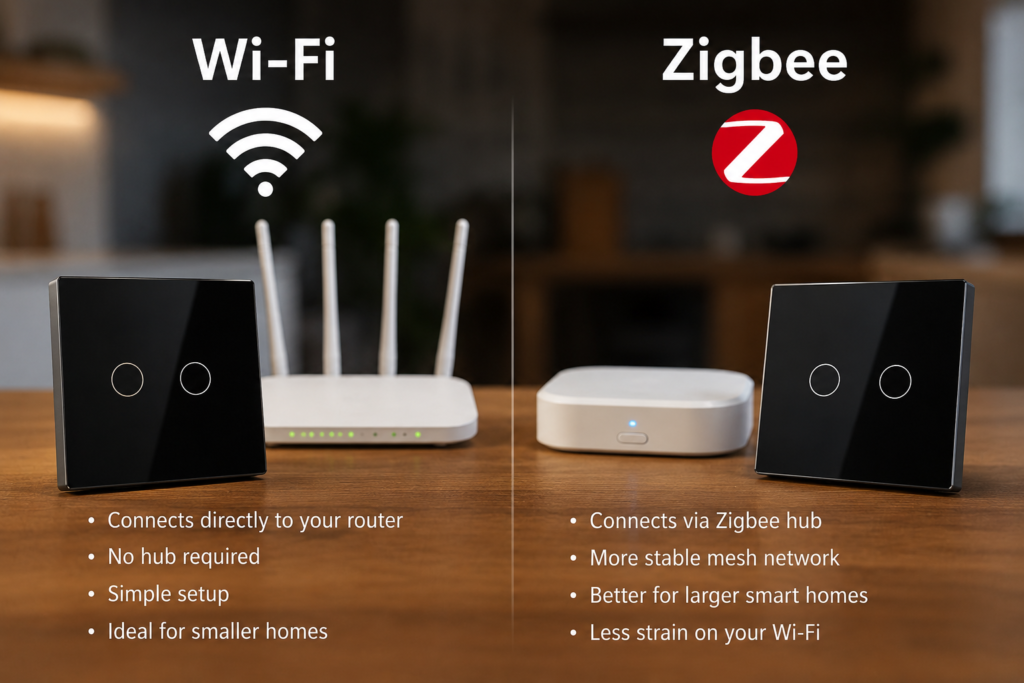
Wi-Fi smart switches connect directly to your router and are usually easier to set up. Zigbee switches typically require a hub, but they can offer better reliability and scalability in larger smart homes.
In this guide, we explain the key differences between Wi-Fi and Zigbee smart switches, their advantages and disadvantages, and which option is best for your home.
If you are still deciding whether you need a neutral wire, read our previous guides:
- Do I Need a Neutral Wire for a Smart Switch in the UK?
- How to Check if Your Home Has a Neutral Wire in the UK
- Best Smart Switches Without a Neutral Wire in the UK
What Is a Wi-Fi Smart Switch?
A Wi-Fi smart switch connects directly to your home’s wireless network. Once connected, it can usually be controlled using an app, voice assistant or automation.
Most Wi-Fi switches do not require extra hardware, which makes them a popular choice for beginners.
Typical features include:
- Control from your phone.
- Voice commands via Alexa or Google Home.
- Timers and schedules.
- Remote access when you are away from home.
- Easy setup without a hub.
What Is a Zigbee Smart Switch?
Zigbee is a low-power wireless technology designed specifically for smart home devices.
Unlike Wi-Fi switches, Zigbee switches usually need a compatible hub, such as a Zigbee gateway, SmartThings hub or other smart home controller.
Instead of connecting directly to your router, Zigbee devices communicate with each other to create a mesh network.
This can improve reliability and reduce the load on your Wi-Fi network.
Wi-Fi vs Zigbee: Key Differences
| Feature | Wi-Fi | Zigbee |
|---|---|---|
| Hub required | No | Usually |
| Easy setup | Very easy | Moderate |
| Uses your router | Yes | No |
| Battery efficiency | Average | Excellent |
| Best for large systems | Not ideal | Yes |
| Internet dependency | Higher | Lower |
| Cost to get started | Lower | Higher |
Which Is Easier to Install?
For most people, Wi-Fi smart switches are easier to install because there is no additional hub to buy or configure.
In many cases, you simply install the switch, download the app and connect it to your home network.
Zigbee switches require an extra step because you need to pair them with a hub before you can use them.
However, once the hub is set up, adding more devices is often quick and straightforward.
Which Is Better for a Large Smart Home?
If you plan to install one or two smart switches, Wi-Fi is often the simplest option.
If you want to build a larger smart home with dozens of devices, Zigbee may be a better choice.
This is because Zigbee devices create a mesh network, meaning each powered device can help pass signals to other devices.
As your system grows, Zigbee networks often become stronger rather than slower.
Do Zigbee Smart Switches Work Without the Internet?
In many cases, yes.
Because Zigbee devices communicate locally through the hub, some automations can continue to work even if your internet connection goes down.
Wi-Fi switches often rely more heavily on cloud services, although this depends on the manufacturer and platform.
Will Too Many Wi-Fi Devices Slow Down My Network?
Possibly.
Modern routers can handle many devices, but adding a large number of smart switches, cameras, plugs and bulbs may increase network congestion.
Zigbee devices use their own network, which helps keep your main Wi-Fi network free for phones, laptops and streaming.
Which Smart Home Platforms Support Wi-Fi and Zigbee?
Many smart switches support popular smart home ecosystems, including:
- Amazon Alexa.
- Google Home.
- Apple HomeKit.
- Samsung SmartThings.
- Tuya Smart.
- Smart Life.
Not every switch supports every platform, so always check compatibility before buying.
What About Tuya and Smart Life?
Many people assume that Tuya and Zigbee are the same thing, but they are not.
Tuya and Smart Life are smart home platforms and mobile apps. Devices that use Tuya can connect over Wi-Fi, Zigbee or other technologies.
For example, you can buy:
- A Wi-Fi smart switch that uses the Smart Life app.
- A Zigbee smart switch that also uses the Smart Life app.
- A Zigbee hub that connects multiple devices through Tuya.
Should You Choose Wi-Fi or Zigbee?
Choose Wi-Fi if:
- You are buying your first smart switch.
- You only plan to automate a few rooms.
- You do not want to buy a hub.
- You want the easiest setup possible.
- You prefer lower upfront costs.
Choose Zigbee if:
- You want to build a larger smart home.
- You already own a Zigbee hub.
- You value reliability and local control.
- You plan to add many smart devices in the future.
- You want to reduce the load on your Wi-Fi network.
Frequently Asked Questions
Is Zigbee better than Wi-Fi for smart switches?
It depends on your needs. Zigbee is often better for larger smart homes, while Wi-Fi is usually easier for beginners.
Do Zigbee switches need a hub?
Most Zigbee switches require a compatible hub or gateway.
Can Wi-Fi smart switches work without the internet?
The physical switch will normally still turn the light on and off, but remote control and automations may stop working.
Are Zigbee smart switches faster?
Many users find Zigbee devices more responsive, particularly in larger systems.
Which is cheaper: Wi-Fi or Zigbee?
Wi-Fi switches are often cheaper to get started with because you do not need to buy a hub.
Can I mix Wi-Fi and Zigbee devices?
Yes. Many smart homes use a combination of both technologies.
Final Thoughts
If you want a simple setup with just a few devices, Wi-Fi smart switches are often the easiest and most affordable choice.
If you plan to expand your smart home over time, Zigbee may offer better long-term performance and reliability.
Neither option is universally better. The right choice depends on the size of your home, the number of devices you plan to install and whether you are happy to use a hub.
Related Guides
- Do I Need a Neutral Wire for a Smart Switch in the UK?
- How to Check if Your Home Has a Neutral Wire in the UK
- Best Smart Switches Without a Neutral Wire in the UK
People Also Search For
- wifi vs zigbee smart switch
- zigbee smart switch UK
- wifi smart switch UK
- do zigbee switches need a hub
- tuya vs zigbee
- smart life vs zigbee
- best smart switch UK
- zigbee mesh network explained
- smart home hub UK
- zigbee vs wifi smart home
- best smart home ecosystem UK
- alexa compatible smart switch
- google home smart switch UK
- wifi or zigbee for smart home


Leave a comment