
Smart Radiator Valves Explained: How They Work and What You Need
Smart radiator valves are becoming a popular way to control home heating more precisely. Instead of setting one temperature for the entire house, they allow you to adjust individual radiators according to how each room is used.
But how do smart radiator valves actually work? Do you need a Zigbee hub? Can you fit one to any radiator? And will they work with your existing central heating system?
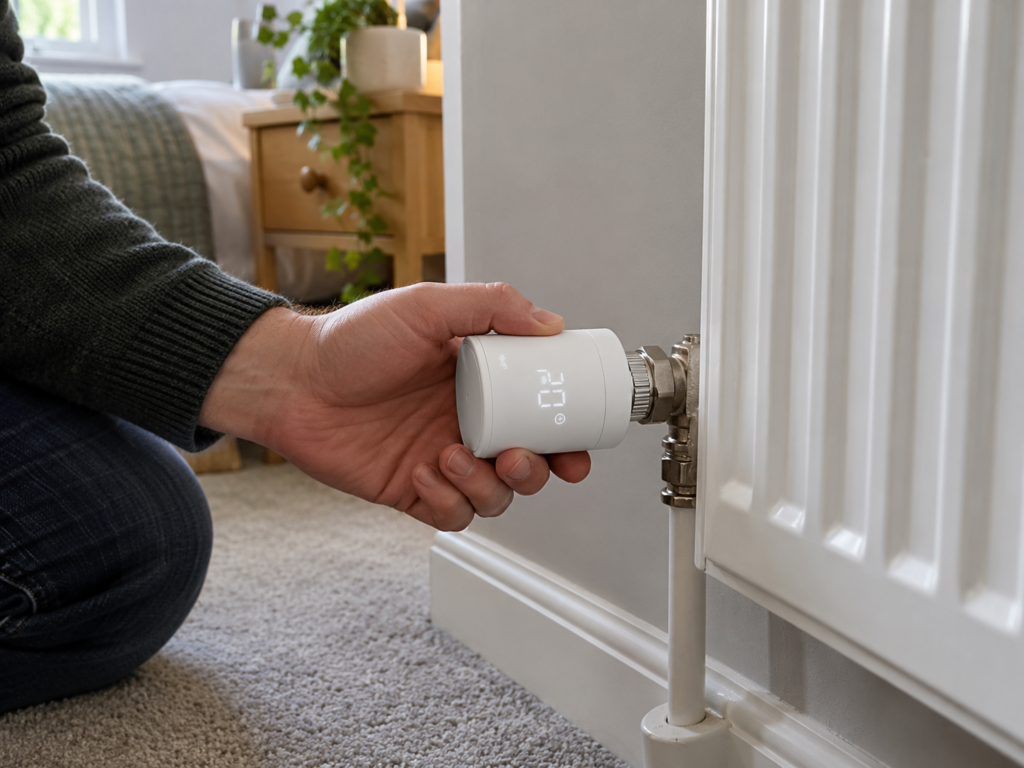
A smart radiator valve, also known as a smart TRV, is an electronic radiator control that automatically adjusts the flow of hot water into a compatible radiator according to a selected temperature and schedule. Many models also support smartphone control and smart home integration.
However, not all smart radiator valves can communicate directly with a boiler, and installing one doesn’t automatically mean you’ll have completely independent heating in every room.
This UK guide explains how smart TRVs work, what equipment you need, how to check compatibility and whether they’re worth considering for your home.
What Is a Smart Radiator Valve?
A smart radiator valve is an electronic version of a thermostatic radiator valve control.
Traditional thermostatic radiator valves, commonly called TRVs, use a numbered dial to regulate the temperature around a radiator. As the surrounding air becomes warmer, the valve reduces the flow of hot water into the radiator.
A smart TRV performs a similar function but uses electronic temperature sensing and a motorised mechanism to adjust the valve.
Depending on the model, it may also provide:
- Digital temperature settings.
- Programmable heating schedules.
- Smartphone app control.
- Manual adjustment using buttons or a dial.
- Holiday, comfort or energy-saving modes.
- Voice control through compatible smart home platforms.
- Temperature history and device status information.
These features allow you to manage individual radiator settings without manually turning each valve throughout the day.
How Do Smart Radiator Valves Work?
Smart radiator valves regulate heat output by adjusting the position of the valve controlling hot water flow through a radiator.
Inside the smart valve head is an electronic control mechanism, usually powered by batteries. The device measures temperature and compares it with the target you’ve selected.
If the surrounding temperature is below the target, the valve can open further to allow more hot water through the radiator when the heating system is supplying it.
When the target temperature is reached, the valve reduces or closes the flow to limit further heating.
For example, if you set a bedroom radiator to 18°C, the smart valve attempts to maintain that temperature by regulating the radiator’s heat output.
However, the temperature reading may be affected by the valve’s position, nearby furniture, curtains or heat coming directly from the radiator.
Some systems support external room temperature sensors, which may provide a more representative reading when placed appropriately.
Can a Smart Radiator Valve Turn the Boiler On?
This is one of the most important things to understand before buying smart TRVs.
A standalone smart radiator valve does not necessarily control your boiler.
It can open its radiator valve when the room requires heat, but that doesn’t guarantee the central heating system will supply hot water at that moment.
Imagine your bedroom is set to 19°C, but the actual temperature is 17°C. Your smart TRV may open, requesting more heat at the radiator.
However, if the central room thermostat has already stopped the boiler’s heating demand, the radiator may remain cool until the central heating runs again.
Some integrated heating systems allow compatible radiator valves to request heat through a central controller. This requires suitable equipment and supported integration.
For a more detailed comparison, read our Smart Thermostat vs Smart Radiator Valves guide.
Smart TRV vs Traditional Thermostatic Radiator Valve
Both traditional and smart thermostatic radiator valves regulate heat output according to the temperature around the radiator.
The main difference is how you control them and the additional functions available.
| Feature | Traditional TRV | Smart TRV |
|---|---|---|
| Temperature control | Manual numbered dial | Digital target temperature |
| Automatic regulation | Yes | Yes |
| Heating schedules | Usually no | Available on supported models |
| Smartphone control | No | Available on connected models |
| Voice assistant integration | No | Model and platform dependent |
| Power requirements | Normally none | Usually batteries |
| Additional equipment | Generally none for normal operation | May require a compatible gateway |
| Initial cost | Generally lower | Generally higher |
A traditional TRV may be perfectly adequate for rooms where the temperature rarely needs changing.
Smart valves become more useful when you want automated schedules, remote adjustments or different heating settings throughout the week.
Can You Fit a Smart Radiator Valve to Any Radiator?
Not every radiator can accept a smart TRV head without additional work.
Many smart radiator valves are designed to replace the existing thermostatic head fitted to a compatible radiator valve body.
If your radiator already has a conventional TRV, upgrading may involve removing the existing head and fitting a compatible smart replacement.
However, radiator valves use different connection sizes and fitting systems.
Check the Valve Connection
Some smart radiator valves use an M30 x 1.5 mm threaded connection, while others include adapters for different valve types.
You must check the actual connection requirements of the smart valve and your existing radiator valve body before ordering.
Don’t assume that all thermostatic radiator valves use the same fitting.
What If Your Radiator Has a Manual Valve?
If your radiator has a simple manual control rather than a thermostatic valve, a smart TRV head may not fit directly.
In that situation, the existing valve body may need to be replaced with a suitable thermostatic one.
Replacing the complete radiator valve body involves plumbing work and may require draining or isolating part of the heating system.
A qualified heating professional can advise whether an upgrade is suitable.
Do Smart TRVs Work on Vertical Radiators?
Smart TRVs may be suitable for some vertical radiators, provided the radiator uses a compatible valve body and the smart head can be installed in an appropriate position.
The orientation and location of the valve can affect temperature measurement and physical clearance.
Always check the manufacturer’s installation requirements rather than choosing solely by radiator shape.
Do You Need a Zigbee Hub for Smart Radiator Valves?
Many smart radiator valves use Zigbee communication technology.
Zigbee is designed for connected devices that exchange relatively small amounts of information, making it suitable for battery-operated smart home equipment.
In a typical Zigbee installation, the smart radiator valve communicates with a compatible gateway, which connects the device to a smart home platform or smartphone app.
For example, our Zigbee Smart Radiator Valve at PYC Online uses the Tuya Smart Life platform and requires a compatible Tuya Zigbee gateway for its connected functions.
The gateway allows supported features such as remote temperature adjustment, scheduling and integration with compatible smart home services.
However, not every Zigbee gateway supports every Zigbee valve. Compatibility can vary according to the device model, gateway and software platform.
Before purchasing, check whether:
- A compatible Zigbee gateway is required.
- The gateway is included in the package.
- Your existing smart home hub supports the device.
- The required smartphone app is available.
- The functions you need are supported by the chosen combination.
Our Zigbee Hub Guide for Smart Thermostats and Radiator Valves explains these requirements in more detail.
If you’re deciding between wireless technologies, you may also find our WiFi vs Zigbee Smart Thermostats comparison useful.
How to Install a Smart Radiator Valve
Installing a smart radiator valve head can be relatively straightforward when your radiator already has a compatible thermostatic valve body.
However, the exact process depends on the product and existing valve connection.
Step 1: Check Compatibility
Identify the existing valve type and compare it with the smart TRV manufacturer’s supported connections.
If an adapter is required, check that the correct adapter is included or available separately.
Step 2: Remove the Existing Thermostatic Head
Follow the valve manufacturer’s instructions for removing the existing thermostatic control head.
Removing a compatible detachable TRV head normally doesn’t require draining the radiator because the valve body remains in place.
However, do not loosen the plumbing connections or attempt to remove the complete valve body as part of a simple head replacement.
Step 3: Prepare the Smart TRV
Install the correct batteries and follow the manufacturer’s initialisation or mounting instructions.
Some smart valves require the motor mechanism to move into an installation position before fitting.
Step 4: Fit the Smart Valve Head
Attach the smart TRV to the compatible radiator valve body using the specified fitting or adapter.
The device should be secure without excessive force.
Step 5: Run Calibration
Many electronic radiator valves perform a calibration process to identify the movement of the existing valve mechanism.
Follow the device instructions and allow the calibration process to finish before normal operation.
Step 6: Connect to the App
If the model supports connected functions, pair it with the appropriate gateway and smartphone app.
Check that temperature adjustments and schedules are working correctly.
If you need to replace the underlying radiator valve body or modify the heating system, use an appropriately competent professional.
How to Set Up Room-by-Room Heating
One of the main reasons people choose smart radiator valves is to manage different rooms independently.
For example, your household might follow a routine like this:
- Living room: A warmer setting during the evening.
- Main bedroom: A comfortable temperature before bedtime.
- Home office: Heating during working hours.
- Spare bedroom: A lower background temperature when not in use.
With compatible smart TRVs, you can create schedules that reflect how these rooms are used.
Some platforms also allow compatible valves to be grouped for easier management.
However, setting different temperatures doesn’t automatically create independently controlled central heating zones.
For true room-by-room heat demand, the smart radiator valves must work with a compatible heating controller capable of communicating those requests to the boiler or heating system.
You should also consider the position of your main room thermostat, radiator balancing and any requirements for maintaining adequate water flow through the heating system.
If you’re planning a complete smart heating upgrade, start with our UK Smart Thermostat Buying Guide to understand the wider heating control options.
Can Smart Radiator Valves Reduce Heating Bills?
Smart radiator valves can help manage heating more efficiently by allowing you to set different temperatures and schedules for individual rooms.
For example, if you rarely use a spare bedroom during the day, reducing its target temperature may help avoid unnecessary heating while the central heating system is running.
However, installing smart TRVs doesn’t automatically reduce energy consumption.
The actual benefit depends on your existing controls, boiler operation, home insulation, heating schedule and the temperatures you select.
If your traditional radiator valves are already correctly adjusted and your heating schedule is efficient, switching to smart versions may produce relatively modest additional savings.
Remember that the cost of the devices, compatible gateways, batteries and any installation work should also be included when assessing value for money.
It’s generally best not to leave rooms completely unheated for extended periods during cold weather, particularly where condensation or damp could become a problem.
For a closer look at energy savings, read Do Smart Thermostats Save Money on Heating Bills?.
Common Smart Radiator Valve Problems
Smart TRVs are relatively simple in principle, but several common issues can affect performance.
The Radiator Doesn’t Heat Up
If the smart valve requests a higher temperature but the radiator stays cold, the central heating may not currently be supplying hot water.
Check the central heating schedule and main room thermostat settings before assuming the smart TRV is faulty.
Other possible causes include a sticking radiator valve pin, trapped air, incorrect installation or a system issue requiring professional attention.
The Temperature Reading Seems Incorrect
Because a smart TRV is positioned close to the radiator, the temperature it senses may differ from the temperature elsewhere in the room.
Heavy curtains, radiator covers or furniture can also affect readings.
Some devices offer temperature calibration settings or support external sensors.
The Valve Won’t Connect to the App
Check that you’re using the correct gateway, supported app and pairing procedure.
For Zigbee devices, ensure that the valve is within suitable communication range of the gateway or supported Zigbee network.
The Valve Makes a Noise
Electronic TRVs contain a small motor that moves the valve mechanism. Brief motor sounds during adjustment can be normal.
Repeated unusual noises or calibration failures may indicate a mounting or mechanical issue.
Follow the manufacturer’s troubleshooting instructions and avoid forcing the mechanism.
Smart Radiator Valves at PYC Online
At PYC Online, our Zigbee TRV Radiator Valve offers connected radiator temperature management through the Tuya Smart Life platform.
The model includes features such as:
- Smartphone temperature adjustment through a compatible Zigbee gateway.
- Weekly programmable heating schedules.
- Manual, comfort, ECO and holiday modes.
- Child lock and antifreeze protection.
- Temperature history and supported voice assistant integration.
- Options for managing multiple compatible valves.
The product is available in different quantity options, making it possible to start with one radiator or plan a larger setup.
Before ordering, confirm that your existing radiator valve is compatible and that you have a suitable Tuya Zigbee gateway.
You can also browse our Smart Thermostat and Heating Controls collection for other connected heating products.
Smart Radiator Valve Buying Checklist
Before purchasing a smart TRV, make sure you can answer these questions:
- Does my radiator already have a compatible thermostatic valve body?
- Do I need a fitting adapter?
- Is the smart valve compatible with my existing smart home gateway?
- Will I need to purchase a Zigbee hub separately?
- Does the valve support the schedules and control features I want?
- Will the radiator receive hot water when the room needs heating?
- Do I need additional equipment to coordinate the valves with my boiler?
- Is the valve positioned where it can measure temperature reasonably accurately?
- Which batteries does the device require?
- Would smart control actually improve how I use this particular room?
Checking these details before buying can help you avoid compatibility problems and unexpected additional costs.
Frequently Asked Questions
Do smart radiator valves work on all radiators?
No. A smart TRV head must fit a compatible thermostatic radiator valve body. Some models include adapters for different valve connections. Radiators with manual valves may require a valve body replacement.
Do smart radiator valves need WiFi?
Not necessarily. Many use Zigbee communication through a compatible gateway. Remote smartphone access may still depend on an internet connection and supported app services.
Can smart radiator valves turn the boiler on?
Some integrated smart heating systems can use room demand from compatible radiator valves to control the boiler. Standalone smart TRVs generally regulate radiator flow without independently starting the boiler.
Can I install smart radiator valves myself?
Replacing a compatible detachable thermostatic head is often straightforward when you follow the manufacturer’s instructions. Replacing the entire valve body involves plumbing work and should be handled by an appropriately competent person.
Do I need a smart valve on every radiator?
No. You can start with selected rooms where separate schedules or temperature settings would be useful. Your heating system’s flow and control requirements should be considered before installing valves throughout the property.
How long do smart radiator valve batteries last?
Battery life varies by model, battery type, usage and operating conditions. Check the manufacturer’s specification rather than assuming every smart valve will last for the same period.
Are smart TRVs better than normal radiator valves?
Smart TRVs offer additional features such as schedules, digital temperature settings and app control. However, traditional TRVs can already regulate room temperature effectively, so the best choice depends on how much additional control you need.
Can smart radiator valves save money?
They may help reduce unnecessary heating when configured appropriately, especially in rooms with different usage patterns. Savings aren’t guaranteed and depend on the wider heating system and household habits.
Final Thoughts
Smart radiator valves can make home heating more flexible by allowing you to manage radiator temperatures and schedules individually.
They’re particularly useful for households where rooms are occupied at different times, such as homes with a separate office, spare bedroom or rooms used mainly in the evening.
However, smart TRVs don’t automatically replace a central thermostat or provide independent boiler control.
Before purchasing, check your radiator valve connection, gateway compatibility and how the devices will work with your existing heating system.
Starting with one or two compatible radiators can be a practical way to decide whether more advanced room-by-room heating control is worthwhile for your home.
Related Guides
- How to Choose a Smart Thermostat for Your Home: UK Buying Guide
- WiFi vs Zigbee Smart Thermostats: Which Is Better?
- Will a Smart Thermostat Work With My Boiler?
- Smart Thermostat vs Smart Radiator Valves: What’s the Difference?
- Best Smart Thermostats for Underfloor Heating
- Do You Need a Zigbee Hub for a Smart Thermostat?
- Do Smart Thermostats Save Money on Heating Bills?
Further Reading
- Energy Saving Trust: Heating Controls – Independent UK advice on thermostatic radiator valves, smart heating controls and efficient heating.
- Centre for Sustainable Energy – UK guidance on home energy use and heating.
- Gas Safe Register – Information about gas safety and registered heating engineers.
People Also Search For
smart radiator valves, how do smart radiator valves work, smart TRV UK, smart thermostatic radiator valve, Zigbee radiator valve, Tuya smart radiator valve, smart radiator thermostat, can smart TRV control boiler, do smart radiator valves need a hub, smart radiator valve installation, smart TRV compatibility, smart radiator valves without WiFi, room by room heating controls, smart heating zones, smart TRV vs thermostat, smart radiator valve buying guide


Leave a comment