
Smart Thermostat vs Smart Radiator Valves: What’s the Difference?
If you’re upgrading your home’s heating controls, you’ve probably come across both smart thermostats and smart radiator valves. They can offer smartphone control, heating schedules and more flexibility over room temperatures, but they don’t do exactly the same job.
A smart thermostat typically controls when your central heating system requests heat, while smart thermostatic radiator valves (smart TRVs) regulate the heat delivered by individual radiators. In a compatible heating system, they can work together to provide more control over different rooms.
So, do you need a smart thermostat, smart radiator valves or both?
This UK guide explains how each device works, their advantages and limitations, and what to check before choosing a smart heating setup for your home.
What Is a Smart Thermostat?
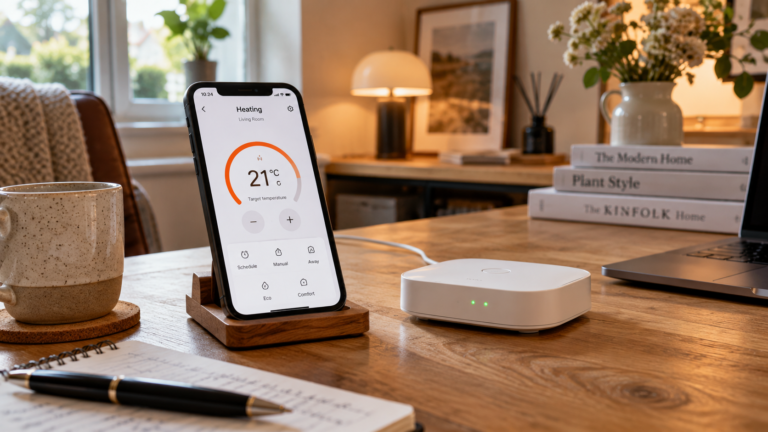
A smart thermostat is a heating controller that allows you to set and manage the temperature of your home. Depending on the model and installation, it can communicate with your boiler, heating controller or other compatible equipment to request heating.
Unlike a basic manual room thermostat, many smart models offer programmable schedules, remote smartphone access and integration with voice assistants.
For example, you might programme your heating to reach 20°C before you wake up, lower the temperature while you’re at work and warm your home again before the evening.
Some smart thermostats also support additional sensors, multiple heating zones or integration with compatible radiator valves.
What Does a Smart Thermostat Actually Control?
In a conventional central heating installation, a room thermostat measures the temperature in its location and determines whether heating is required.
When the measured temperature falls below the selected target, a compatible controller requests heat from the boiler or heating system.
Once the required temperature is reached, the heating demand can stop.
This works well for many households, but a single thermostat doesn’t necessarily know how warm every other room is.
If your living room reaches the target temperature before an upstairs bedroom, the central heating may stop requesting heat even though the bedroom is still cooler than you would like.
For more information about selecting a suitable model, read our UK Smart Thermostat Buying Guide.
What Is a Smart Radiator Valve?
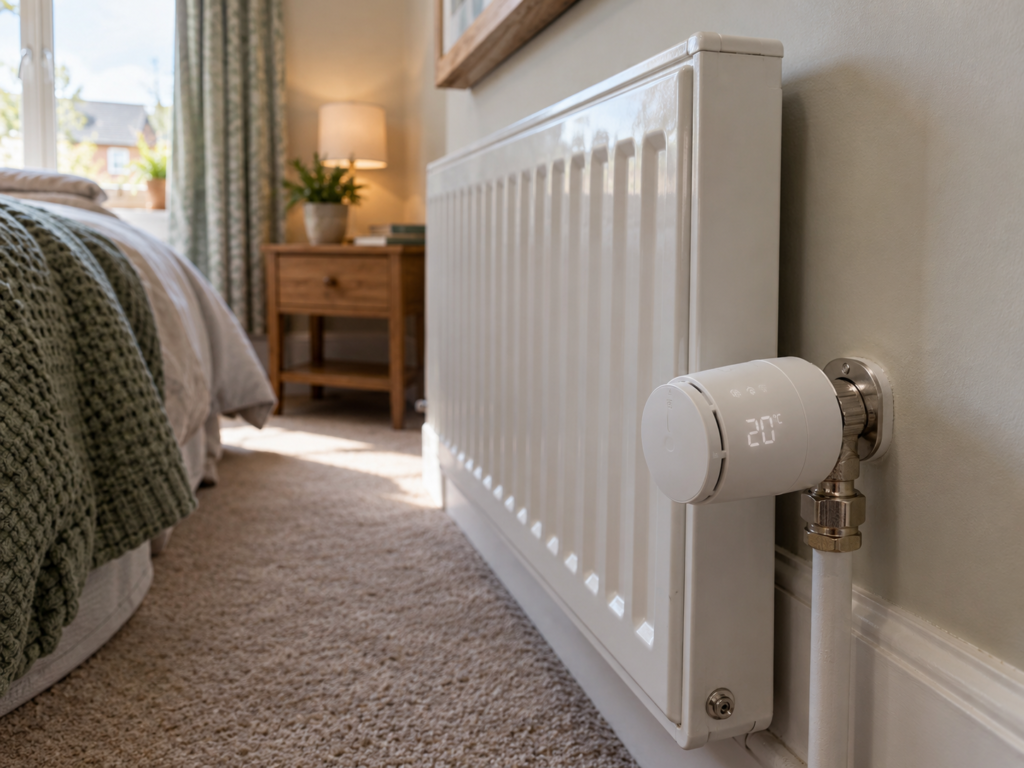
A smart radiator valve is an electronic heating control fitted to a compatible thermostatic radiator valve body.
It’s often called a smart TRV, which stands for smart thermostatic radiator valve.
Instead of manually turning a numbered radiator control, you can set a target temperature using the device itself or, on supported models, a smartphone app.
The valve senses the temperature around the radiator and adjusts the flow of hot water through it.
For example, you could set your bedroom to 18°C and your living room to 20°C, provided the radiator valves and heating system are operating under suitable conditions.
Some smart TRVs offer weekly schedules, holiday modes, temperature history and voice assistant integration.
Does a Smart Radiator Valve Control the Boiler?
Not necessarily, and this is one of the most important differences between smart TRVs and smart thermostats.
A standalone smart radiator valve can regulate the heat delivered by its radiator when hot water is available from the central heating system.
However, it doesn’t automatically tell your boiler to start heating whenever that room needs warmth.
For example, your bedroom’s smart TRV might request a higher temperature while the main room thermostat has already switched off the heating demand.
Without a compatible system that coordinates the valves and boiler controller, the bedroom radiator may not receive additional hot water until the central heating operates again.
Some integrated smart heating systems support room-by-room heat demand, but this depends on the compatibility of the valves, gateway and central heating controller.
Our Smart Radiator Valves Explained guide covers how these devices work and what equipment you may need.
Smart Thermostat vs Smart Radiator Valves: Key Differences
Although both devices can help you manage heating, their main functions are different.
| Feature | Smart Thermostat | Smart Radiator Valve |
|---|---|---|
| Main purpose | Controls heating demand through compatible heating controls | Regulates individual radiator heat output |
| Typical location | Wall or portable room controller | Mounted on a radiator valve |
| Boiler control | Possible with a compatible controller or receiver | Requires supported integration for direct heating demand |
| Individual room settings | Depends on zoning and connected equipment | Yes, at its radiator |
| App control | Available on supported models | Available on supported models |
| Scheduling | Common feature | Common feature |
| Additional equipment | May require receiver or gateway | May require compatible gateway and valve adapters |
| Best suited to | Central heating management | Room-by-room radiator temperature control |
The main point is that neither device necessarily replaces the other.
A smart thermostat can control central heating demand without independently adjusting every radiator, while smart TRVs can regulate individual radiators without necessarily controlling the boiler.
Do You Need Smart Radiator Valves If You Already Have a Smart Thermostat?
No, you don’t necessarily need smart radiator valves if you already have a smart thermostat.
If your home maintains comfortable temperatures using one central thermostat and your existing radiator controls, adding smart TRVs might not provide enough extra benefit to justify the cost.
However, smart radiator valves can be useful when different rooms have different heating requirements.
Consider a typical three-bedroom house. You might use the living room throughout the evening, one bedroom every night and a spare room only occasionally.
A central thermostat can control heating according to the temperature in its location, while smart TRVs may allow you to set lower target temperatures for rooms that are used less often.
This can reduce unnecessary heating in certain rooms when the system is configured appropriately.
However, you should avoid allowing unused rooms to become excessively cold, particularly where condensation or damp could develop.
Can You Use Smart Radiator Valves Without a Smart Thermostat?
In some installations, smart TRVs can operate alongside an existing conventional heating controller.
For example, you might retain your current programmer and room thermostat while adding compatible smart valves to selected radiators.
The valves can then regulate individual radiator temperatures during periods when the central heating is running.
However, this setup has an important limitation: the radiator valves generally cannot independently demand heat from the boiler unless a supported integration provides that function.
If the central heating is off, simply increasing the target temperature on a standalone smart TRV may not make the radiator warm up.
For fully coordinated room-by-room heating, you may need a compatible central controller, gateway or heating system designed to manage demand from multiple rooms.
It’s worth checking these requirements before investing in several smart radiator valves.
How Do Smart Thermostats and Smart TRVs Work Together?
When properly integrated, a smart thermostat and compatible smart radiator valves can form part of a more flexible heating system.
The central controller manages the boiler or heating demand, while individual radiator valves adjust heat output in different rooms.
For example, you might have the following heating preferences:
- Living room: 20°C during the evening.
- Main bedroom: 18°C overnight.
- Home office: 20°C during working hours.
- Spare bedroom: A lower background temperature when unused.
In a compatible system supporting room-by-room heat requests, individual zones may be able to request heating when needed.
However, not every combination of smart thermostat and smart TRV provides this functionality.
Two devices supporting the same smartphone app or wireless protocol doesn’t guarantee that they can coordinate boiler demand.
Check whether the specific controller, valves and gateway support the required heating integration.
Are Smart Radiator Valves Worth It for Every Room?
Not always. You don’t necessarily need a smart valve on every radiator to benefit from more flexible temperature control.
It may make sense to start with rooms that have different heating schedules or temperatures from the rest of the house.
For example, a home office used during the day and a bedroom used mainly at night might benefit from separate radiator schedules.
Before adding smart TRVs throughout your home, consider how your radiators are currently controlled.
Some radiators may already have manually adjustable thermostatic valves, while others use simple manual valves.
Many smart TRV heads replace compatible existing thermostatic heads rather than the complete valve body. However, a radiator without a suitable thermostatic valve body may require plumbing work before a smart head can be installed.
It’s also important to consider radiator placement, temperature sensing and any existing system requirements.
In conventional heating systems, the radiator in the room containing the main wall thermostat is often treated differently from the others to prevent conflicting controls. Your installer should confirm the appropriate arrangement.
Similarly, heating systems may require a suitable bypass or permanently available water flow path. This should be checked before fitting controls that could close multiple radiators.
WiFi vs Zigbee Smart Heating Controls
Smart thermostats and smart radiator valves can use different communication technologies.
WiFi devices commonly connect through a compatible home router, while Zigbee products generally communicate through a supported gateway.
Zigbee is often used for battery-powered smart radiator valves because it is designed for low-power communication.
For example, a Zigbee TRV may connect to a compatible gateway, allowing temperature adjustments and schedules through a smartphone app.
However, Zigbee compatibility isn’t universal. A gateway and valve must support each other, and additional integration may be required for coordinated central heating control.
Our WiFi vs Zigbee Smart Thermostats comparison explains the main differences, while Do You Need a Zigbee Hub? covers gateway requirements.
Can Smart Thermostats and Radiator Valves Save Money?
Smart heating controls can help reduce unnecessary energy use, particularly when they allow you to match heating schedules and temperatures to how you actually use your home.
A smart thermostat may help by lowering the temperature when you’re away, while smart TRVs can limit unnecessary heating in certain rooms.
For example, reducing the target temperature in a rarely used bedroom may help avoid overheating that space when the central heating is operating.
However, savings depend on your heating system, insulation, existing controls and household routines.
Simply replacing conventional controls with smart versions will not automatically reduce your energy bills if the temperatures and heating periods remain unchanged.
Installation costs, gateways, batteries and additional equipment should also be considered.
Read our guide to smart thermostat savings for a more detailed explanation.
What Should You Check Before Buying Smart TRVs?
Before purchasing smart radiator valves, it’s worth checking a few practical details.
- Valve compatibility: Confirm that the smart head fits your existing thermostatic radiator valve body or that suitable adapters are available.
- Gateway requirements: Check whether the device needs a compatible Zigbee hub or another controller.
- Boiler integration: Establish whether the valve can only regulate the radiator or can also request heat through a compatible system.
- Temperature measurement: Consider whether the location of the valve could affect its temperature reading.
- Battery requirements: Check which batteries the product uses and whether they’re included.
- Scheduling and app features: Make sure the supported functions match your requirements.
- Number of radiators: Decide which rooms would benefit most before purchasing a complete set.
For more detailed advice on choosing and setting up radiator controls, see our complete smart radiator valves guide.
Smart Thermostats and Radiator Valves at PYC Online
At PYC Online, we offer smart heating products for different applications, including central boiler control and individual radiator temperature management.
Zigbee Smart Radiator Valve
Our Zigbee Smart Radiator Valve supports temperature adjustments and programmable schedules through the Tuya Smart Life platform.
Features include weekly scheduling, several operating modes, temperature history and voice assistant compatibility through supported integrations.
The device requires a compatible Tuya Zigbee gateway for its connected functions and must be fitted to a suitable radiator valve.
It is designed for regulating radiator temperature and shouldn’t be assumed to provide standalone boiler control.
Wireless Smart Boiler Thermostat
For compatible central heating installations, our Wireless Smart Boiler Thermostat is available in WiFi and Zigbee versions.
It is designed for suitable dry-contact heating controls and offers app-based temperature adjustment and programmable heating schedules.
Before choosing a variant, confirm the correct boiler connection method and any additional equipment requirements.
You can also explore our Smart Thermostat collection for additional heating control options.
If you’re unsure about compatibility with your boiler, our UK boiler compatibility guide explains what to check before purchasing.
Which Is Better: Smart Thermostat or Smart Radiator Valves?
The answer depends on how you want to control your heating.
Choose a Smart Thermostat If:
- You want to manage central heating through a compatible boiler controller.
- You need remote temperature adjustment and whole-home scheduling.
- You’re replacing an existing room thermostat.
- Your current radiator controls already provide enough flexibility.
- You want to start with a simpler smart heating setup.
Consider Smart Radiator Valves If:
- You want different temperature settings for individual rooms.
- Some rooms are used much less often than others.
- You want programmable radiator schedules.
- You already have compatible central heating controls.
- You plan to build a supported multi-room heating system.
Consider Both If:
- You want central heating management and room-by-room radiator control.
- Your heating controller and smart valves support the necessary integrations.
- Your household uses different rooms at different times.
- You’re prepared to check gateway, radiator and boiler compatibility before installation.
For many UK households, a suitable central thermostat combined with properly configured radiator controls provides a practical starting point.
Adding smart TRVs may offer additional flexibility, but the most advanced setup isn’t always necessary.
Frequently Asked Questions
Are smart radiator valves the same as smart thermostats?
No. A smart thermostat typically manages central heating demand, while a smart radiator valve regulates the heat delivered by an individual radiator. They can complement each other but perform different functions.
Can smart radiator valves turn the boiler on?
Some integrated smart heating systems allow radiator valves to request heating through a compatible controller. However, standalone smart TRVs generally cannot start the boiler independently.
Do I need a smart thermostat for every room?
No. Many homes use a central thermostat alongside radiator controls. Room-by-room heating may be possible through compatible smart TRVs or separately controlled heating zones.
Can I replace normal radiator valves with smart ones?
Many smart TRV heads can replace compatible thermostatic valve heads. If your radiator has a manual valve rather than a suitable thermostatic valve body, plumbing work may be needed.
Will smart radiator valves work without WiFi?
It depends on the model. Some Zigbee valves communicate locally through a compatible gateway, while remote app control may need internet access. Basic local functions and offline behaviour vary between products.
Do smart radiator valves save more energy than a smart thermostat?
Neither automatically guarantees greater savings. A smart thermostat can help manage whole-home heating schedules, while smart TRVs may reduce unnecessary heating in selected rooms. Actual results depend on your existing controls and how the system is used.
Should I install a smart TRV on every radiator?
Not necessarily. Start by identifying which rooms need independent temperature control. Any system-wide installation should also account for boiler demand, water flow, bypass arrangements and the location of the main room thermostat.
Final Thoughts
Smart thermostats and smart radiator valves solve different heating problems.
A smart thermostat is usually the starting point for managing central heating demand and schedules, while smart TRVs can give you more flexibility over individual radiator temperatures.
For some households, a compatible smart thermostat will provide all the control they need. Others may benefit from adding smart radiator valves in bedrooms, home offices or less frequently used rooms.
If you’re considering using both, check that the devices can work together in the way you expect. Sharing an app or wireless technology doesn’t automatically mean the radiator valves can request heat from the boiler.
The best solution is one that suits your existing heating system, household routine and the level of control you actually need.
Related Guides
- How to Choose a Smart Thermostat for Your Home: UK Buying Guide
- WiFi vs Zigbee Smart Thermostats: Which Is Better?
- Will a Smart Thermostat Work With My Boiler?
- Smart Radiator Valves Explained: How They Work and What You Need
- Best Smart Thermostats for Underfloor Heating
- Do You Need a Zigbee Hub for a Smart Thermostat?
- Do Smart Thermostats Save Money on Heating Bills?
Further Reading
- Energy Saving Trust: Heating Controls – Independent advice about thermostats, radiator valves and controlling home heating in the UK.
- Gas Safe Register – Guidance on gas safety and finding appropriately registered heating engineers.
- Electrical Safety First – Electrical safety guidance for UK homes.
People Also Search For
smart thermostat vs smart radiator valves, smart thermostat vs TRV, do I need smart radiator valves, smart radiator valves UK, smart TRV vs thermostat, can smart radiator valves control boiler, smart thermostat room by room heating, smart heating zones, Zigbee smart radiator valve, Tuya smart TRV, smart radiator valve compatibility, smart central heating controls, radiator thermostat WiFi, smart radiator heating system, smart TRV buying guide


Leave a comment