
What Can You See With a Microscope at Home?
What Can You See With a Microscope at Home?
Many people wonder what you can actually see with a microscope at home. The good news is that even a basic microscope can reveal a fascinating hidden world that is normally invisible to the naked eye. With the right magnification and lighting, you can explore plant structures, tiny insects, fabric fibres, coin details and even electronic components.
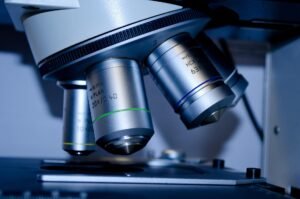
Home microscopes are popular with beginners, students, hobbyists and anyone curious about science. Modern digital microscopes and beginner microscopes make it easy to explore small objects using a built-in screen or a computer connection, allowing you to see fine details without complicated laboratory equipment.
What Things Can You Look At With a Microscope?
You do not need a laboratory to start using a microscope. Many everyday objects contain interesting structures that become visible when magnified. Even a simple microscope can reveal patterns and textures that are normally impossible to see.
Here are some examples of common things people observe with a home microscope:
- Plant leaves and plant cells
- Insects and insect wings
- Human hair and animal hair
- Fabric fibres and textile materials
- Salt, sugar and food crystals
- Paper fibres and printed ink
- Coins and small engravings
- Electronic circuit boards
These objects are easy to find at home and can be surprisingly detailed when viewed under magnification.
Looking at Plant Structures
Plants are one of the most interesting things to examine with a microscope. Leaves often contain complex vein patterns, tiny pores and textured surfaces that become visible when magnified.
You can also look at pollen grains, flower petals and small seeds. These often show colourful patterns and structures that are difficult to notice without magnification. Even a beginner microscope can reveal the internal structure of many plant samples.
Observing Insects and Small Creatures
Insects become extremely detailed under magnification. The structure of wings, legs and antennae often shows intricate patterns that are invisible at normal scale.
Common insect specimens for microscope observation include:
- Butterfly or moth wings
- Small beetles
- Ants
- Spider legs
- Fly wings
These objects are commonly used in beginner science experiments because they show strong detail even at moderate magnification levels.
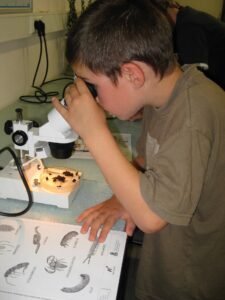
Examining Hair and Fabric Fibres
Hair and textile fibres are also fascinating under a microscope. When magnified, different materials reveal unique patterns and textures.
Human hair, for example, shows layered cuticle structures along the strand. Animal hair can look very different, which makes it interesting for comparison experiments.
Fabric fibres such as cotton, wool, nylon and polyester also have different structures. These can be clearly seen using a basic microscope, making them a popular example in home science projects.
Looking at Coins and Small Details
Another popular use for a microscope at home is examining small mechanical or engraved objects. Coins, stamps and jewellery often contain tiny details that become much clearer when magnified.
Collectors sometimes use microscopes to inspect coin surfaces, small scratches or minting details. Digital microscopes are especially useful for this because they allow you to view the image on a screen and even capture photos.
Using a Microscope for Electronics and Soldering
Many hobbyists use microscopes to inspect electronic components and circuit boards. Small solder joints, connectors and microchips can be difficult to see clearly without magnification.
A digital microscope can help when working with:
- PCB circuit boards
- Small solder joints
- Micro connectors
- Surface-mount components
This is one reason why digital microscopes are popular with electronics repair enthusiasts and DIY technicians.
What Magnification Do You Need?
The magnification level determines how much detail you can see. Many beginner microscopes offer magnification ranges between 100x and 1000x, which is enough for most home observations.
Lower magnification works well for larger objects such as insects, leaves and coins. Higher magnification allows you to see finer structures such as fibres or plant cells.
Digital microscopes often advertise higher magnification numbers, but the most important factor is image clarity and lighting rather than the number itself.
Can You See Bacteria With a Home Microscope?
Most home microscopes are not powerful enough to clearly observe bacteria. Bacteria are extremely small and usually require specialised laboratory microscopes and proper sample preparation.
However, many other microscopic structures can still be seen with a basic microscope, including plant cells, fibres and tiny insects. These objects are often much easier to observe and still provide a fascinating view of the microscopic world.
Why Digital Microscopes Are Popular for Home Use
Digital microscopes are becoming very popular for home experiments and hobby use. Instead of looking through a traditional eyepiece, the image can be displayed on a screen or computer.
This makes them easier to use for beginners and allows you to capture photos or videos of what you are observing. Digital microscopes are often used for learning, collecting, electronics inspection and small object analysis.
Final Thoughts
A microscope can turn everyday objects into fascinating discoveries. From plant structures and insects to fabric fibres and electronic components, there are many things you can explore without leaving your home.
Even a simple microscope can reveal patterns and structures that are normally hidden from view. For beginners, hobbyists and curious learners, a home microscope is an easy way to explore the microscopic world and see familiar objects from a completely new perspective.
Key Details
- A microscope allows you to see structures that are invisible to the naked eye
- Common samples include plants, insects, hair, fibres and coins
- Digital microscopes are easy to use and suitable for beginners
- Magnification between 100x and 1000x is usually enough for home use
- Microscopes are often used for learning, hobbies and electronics inspection
- Most home microscopes cannot clearly show bacteria
- Many everyday objects become fascinating under magnification
People Also Ask
What can you see with a microscope at home?
You can see plant structures, insects, fabric fibres, hair, coins, food crystals and electronic components using a typical home microscope.
What magnification microscope do you need for home use?
Most home microscopes with magnification between 100x and 1000x are suitable for observing common samples such as leaves, fibres and insects.
Can you see cells with a home microscope?
Some plant cells can be observed with a home microscope, especially at higher magnification levels and with proper lighting.
Are digital microscopes good for beginners?
Yes, digital microscopes are often easier for beginners because the image can be displayed on a screen and captured as photos or videos.
People also searched for
what can you see with a microscope, microscope for beginners, digital microscope for home use, what to look at under a microscope, microscope experiments at home, beginner microscope magnification, microscope for coins and electronics, digital microscope with screen, microscope science projects, things to observe under a microscope
What Is the Best Mouse Pad for Gaming?
Further reading

What Is the Best Mouse Pad for Gaming?

9 Keyboards Types You Need to Know About

Leave a comment